Borrowed from elsewhere
Songs taken from older traditions and reshaped by the arrangement.
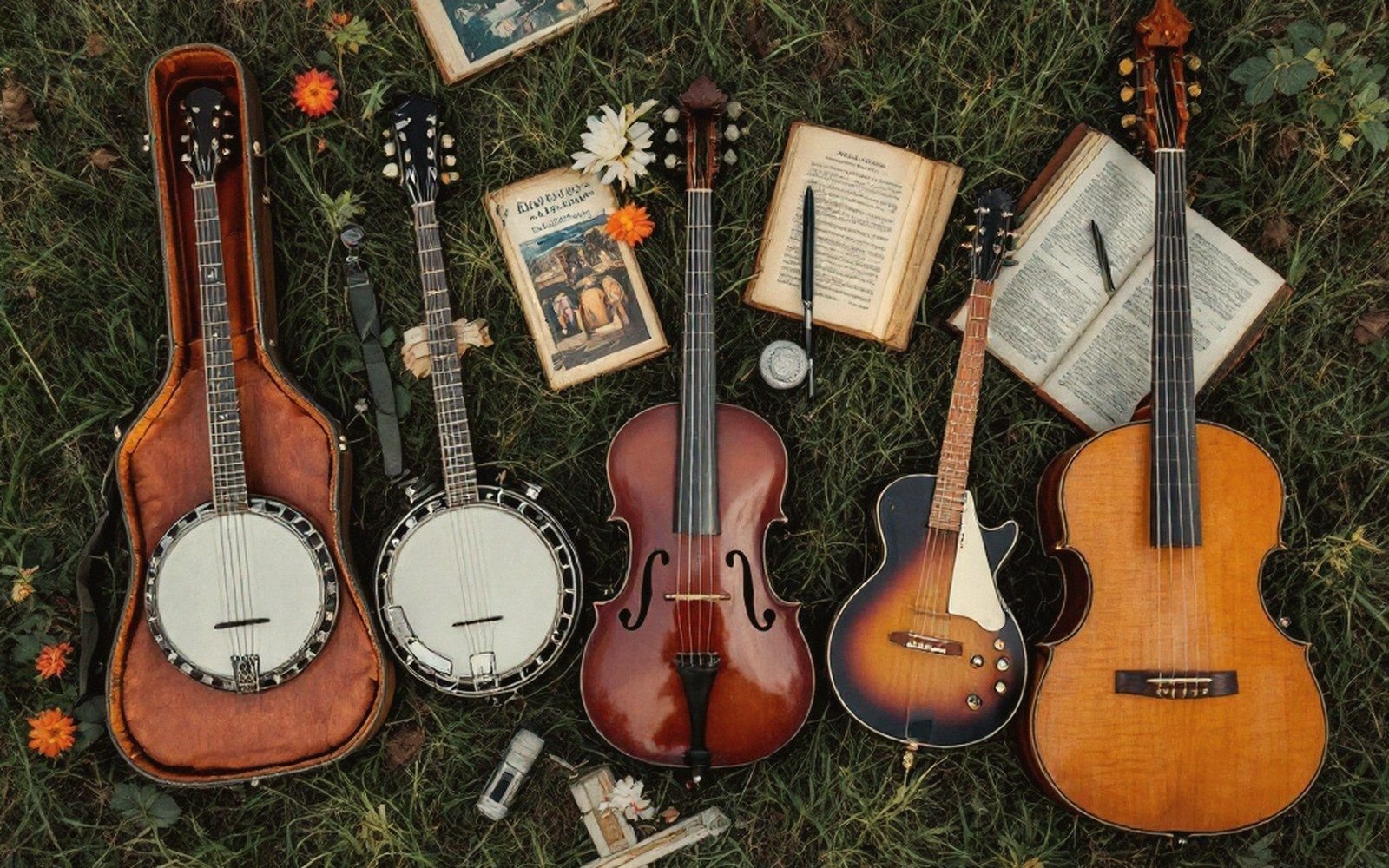
Material arrives from older traditions and is reshaped by the arrangement, rather than the other way round.
The bluegrass repertoire did not arrive with Bill Monroe. It was assembled — from shape-note hymns, Scots-Irish fiddle tunes, vaudeville, the blues, and the string-band material that had been circulating across the rural South for decades before the first notes were ever cut at a Nashville session.
What the arrangement does to the source
A song carried into the bluegrass circle changes the moment the five instruments get hold of it. The banjo roll locks it to a driving pulse it may never have had. The mandolin chop inserts a percussive backbeat. The tenor harmony is stacked above the melody rather than below, giving even a mournful Carter Family gospel number an urgent brightness. The material provides the melody and the words; the arrangement provides the energy and the particular ache.
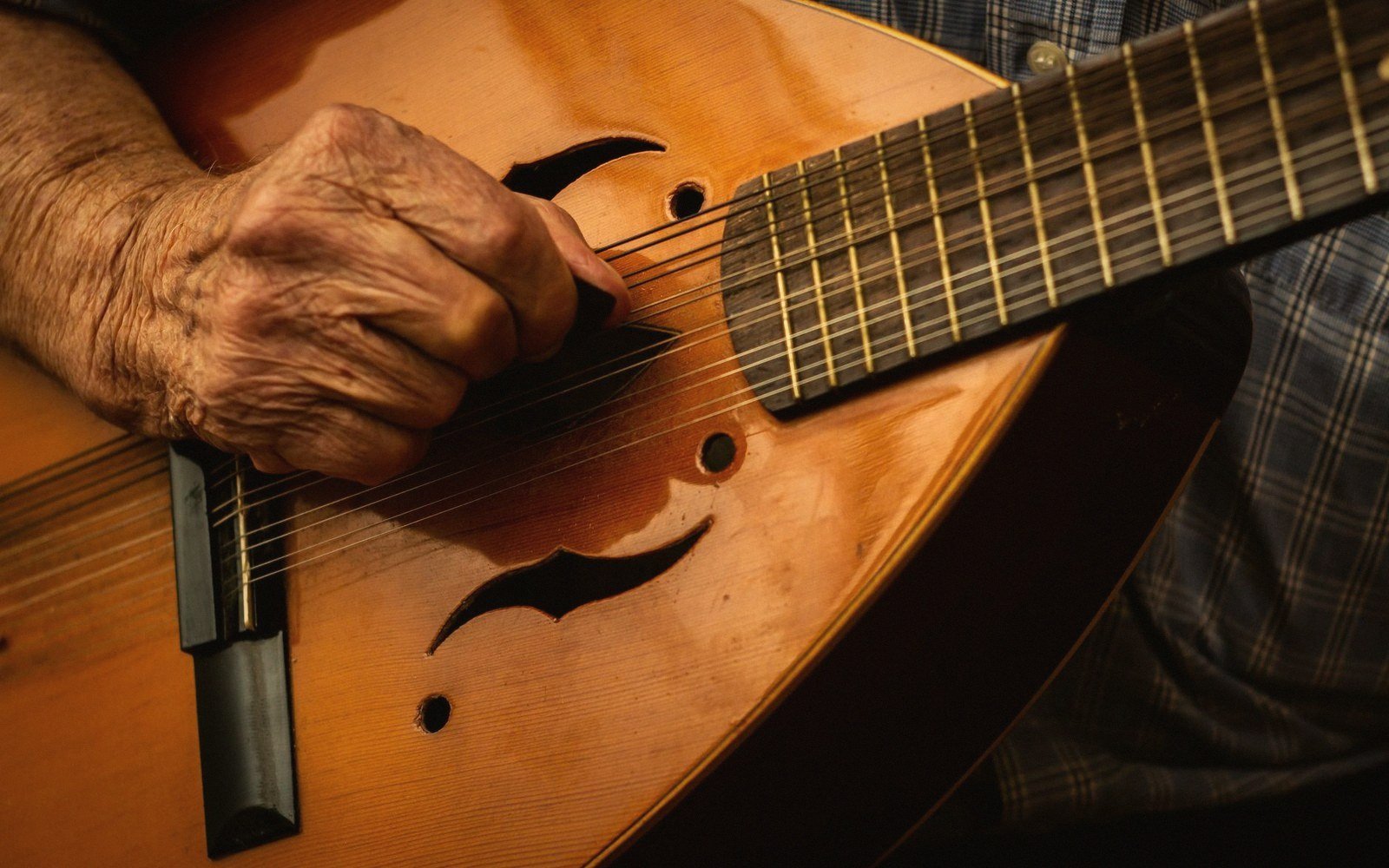
The mandolin’s short, damped chord does the work a snare drum does elsewhere.
Photo: Marcelo Renda / Pexels"Barbara Allen," an English broadside ballad documented in the British Isles by the seventeenth century, turns up across the Appalachian repertoire wearing whatever clothes the local singer happened to have. In a bluegrass setting it becomes a vehicle for close harmony and, at the break, a fiddle answer in the gap between verses. The song is unmistakable but the sonic world it inhabits is entirely the product of the post-war arrangement Monroe and his contemporaries codified.
The same logic applies to Monroe's own material. "Blue Moon of Kentucky" began as a waltz — a three-quarter-time piece reworked into four-four because four-four is what the banjo roll and the chop are built for. The form adapts to the format, not the other way around.
What survives the crossing is melodic identity and lyric. What gets stripped away, or at least reshaped, is rhythmic character, harmonic colour, and the original performance context. A fiddle tune from County Donegal and a sanctified hymn from a shape-note book both flatten into the same metronomic drive once the five instruments arrange themselves around one microphone.
This is not violence done to the source. It is how songs everybody knows accumulate — by being strong enough to survive translation.
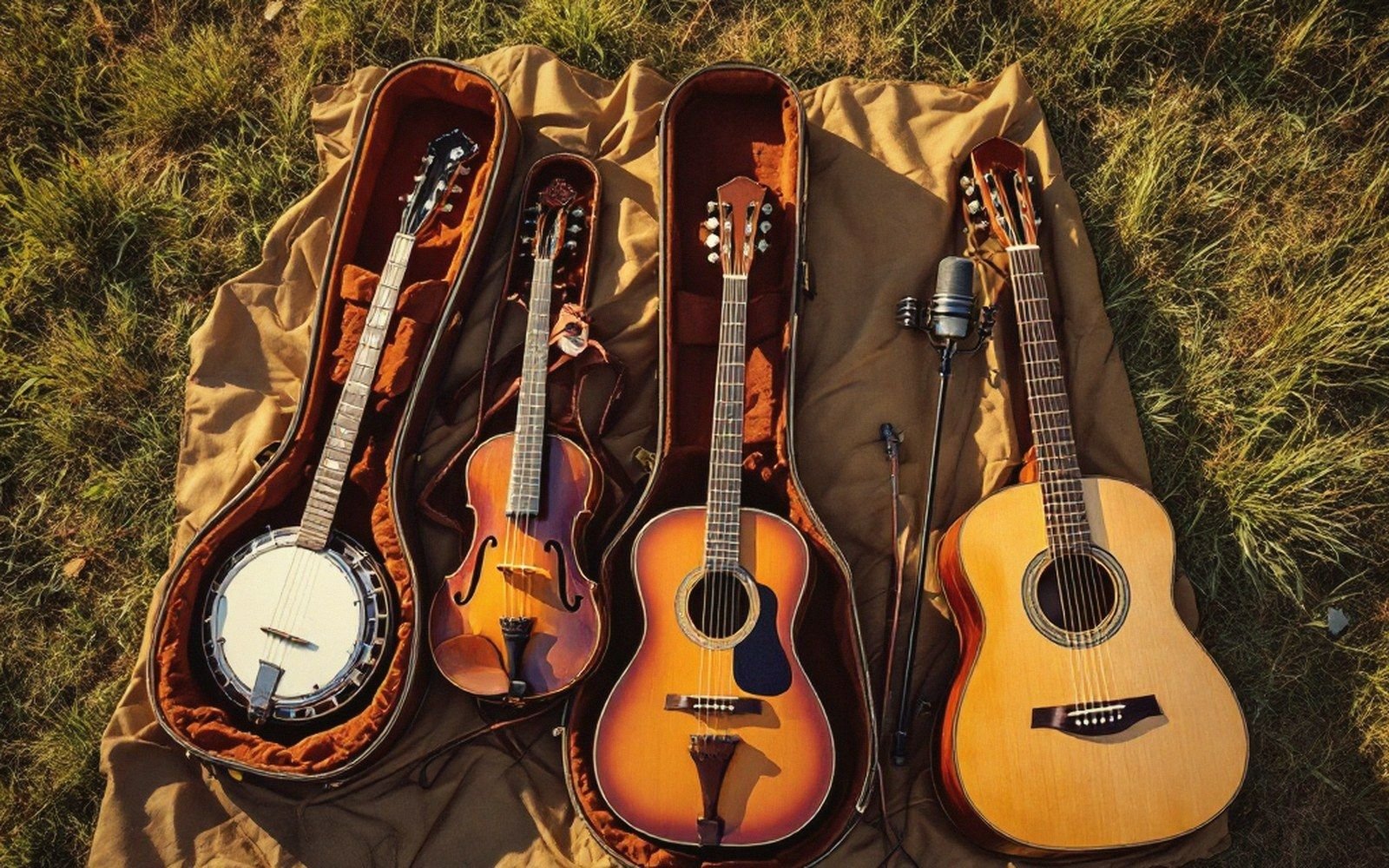
Five instruments, five jobs. In a standard band none of them doubles another’s work.
Filed in The Repertoire