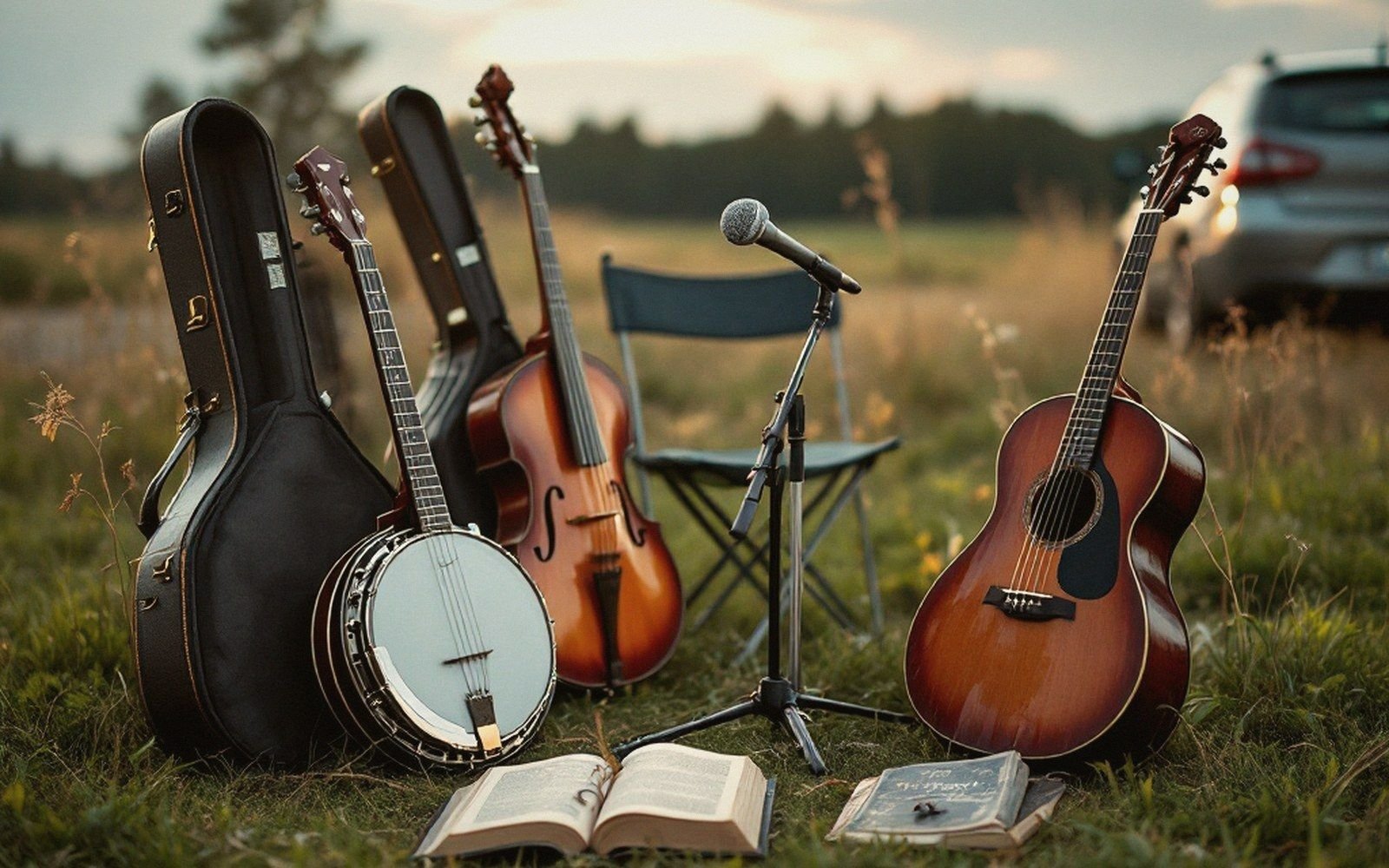
A tune with no words is a vehicle. Everyone takes a break, and the form comes round again.
Tunes that do the talking
In a repertoire built largely around sung narrative, the instrumental sits apart — no lyric to carry meaning, no chorus to lock onto. What it carries instead is structure: a melody strong enough to be a destination, and a form open enough to be a vehicle for whoever steps up to it.
The core of the bluegrass instrumental is almost always the fiddle tune. Many came into the tradition already old — "Salt Creek," "Shady Grove," "Fire on the Mountain" — pieces from the broader old-time and Anglo-Celtic stock that Bill Monroe's generation absorbed and reorganized. Monroe himself wrote instrumentals that became standards: "Wheel Hoss" and "Raw Hide" are as fixed in the shared repertoire as any hymn or murder ballad. The difference from old-time playing is what the arrangement does with them. Where old-time tends toward a continuous, communal drone, bluegrass sharpens the tune into a showcase: the melody goes around the band, each instrument taking it in turn while the others drive underneath.
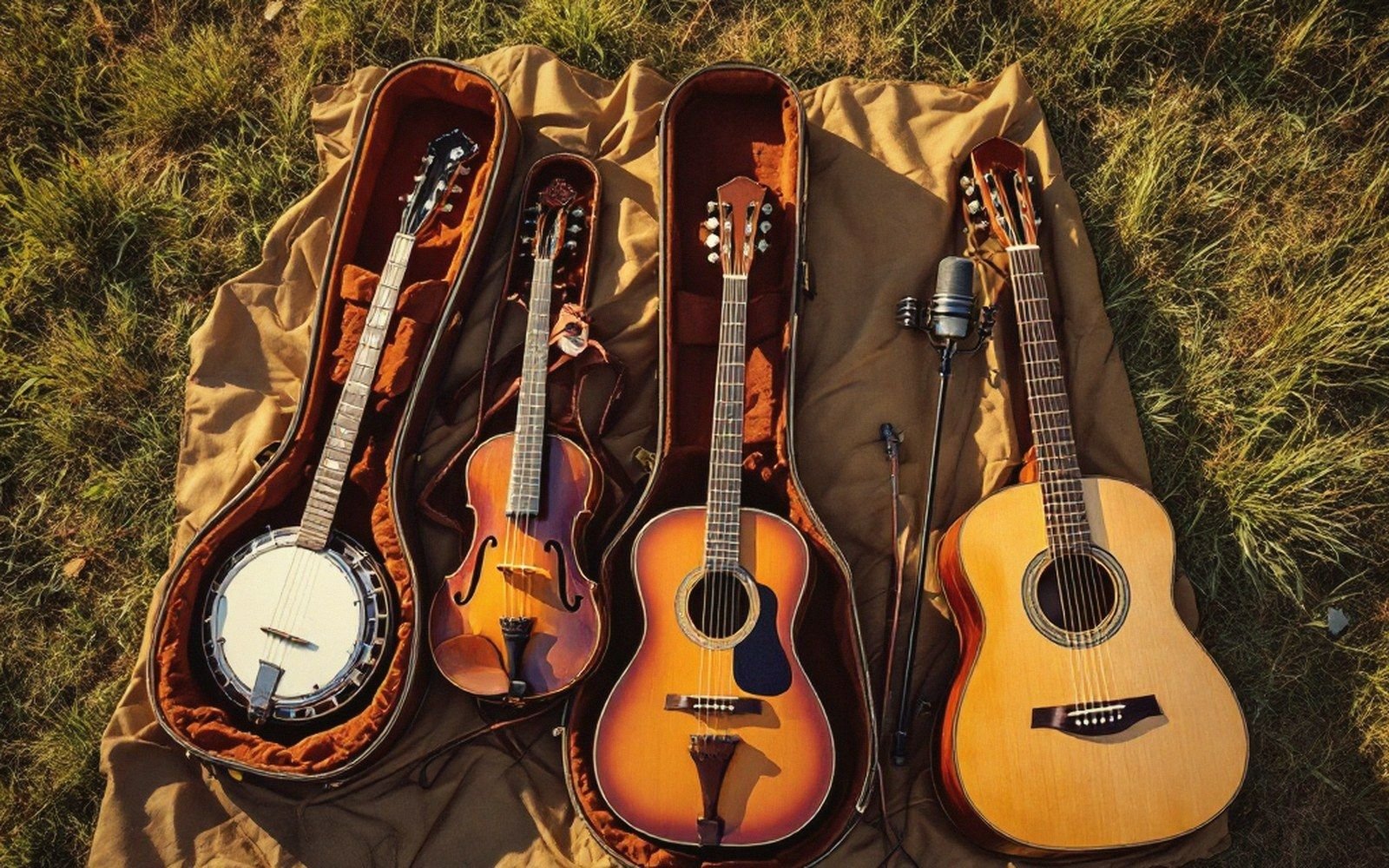
Five instruments, five jobs. In a standard band none of them doubles another’s work.
That rotation is the point. An instrumental is one of the few places in the format where every instrument gets an equal claim on the melody. The roll that never stops becomes a lead voice; the mandolin drops its chop and plays the tune outright; the guitar steps out of its rhythm function and takes a break. The fiddle, the banjo, the mandolin, the guitar — the melody passes between them like a baton, and the listener follows it from instrument to instrument rather than line to line in a lyric.
The tempos tend to run fast. Many bluegrass instrumentals are played at a clip that emphasizes the mechanical precision of the banjo roll and the rhythmic bite of the mandolin's single-string runs. Speed is partly exhibition — a clean break at 200 beats per minute is an undeniable thing — but it also functions as pressure. Under tempo, small rhythmic errors become audible; the tightness of a band shows itself quickly in an instrumental where there is nothing else to listen to.
Form is usually AABB — two eight-bar sections, each repeated — sometimes extended with a C part. It is simple enough that a player who knows the tune can join a circle mid-performance without losing the thread. That accessibility is the other function of the shared instrumental repertoire: it is the common ground of the car-park jam, the piece that signals to a stranger that everyone here knows the same map.
What no words means, practically, is that the music has to justify itself as sound alone. In a tradition that prizes the human voice above almost everything, the fact that instrumentals survive and are loved says something about how much the arrangement itself — the interplay, the drive, the passing of the tune — can express.
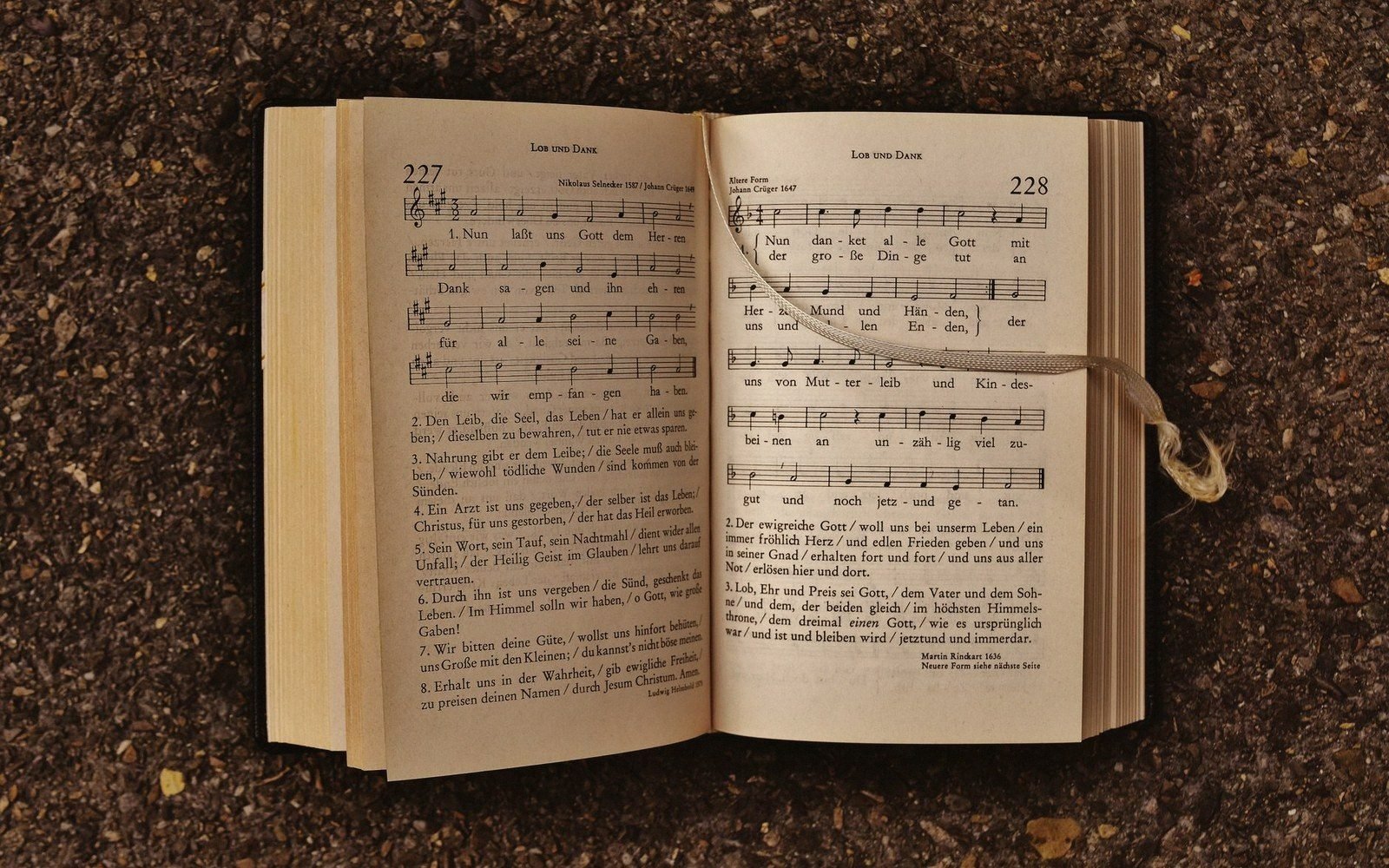
Printed collections record the repertoire. They do not define it.
Photo: Pixabay / PexelsFiled in The Repertoire