The roll that never stops
A three-finger banjo pattern running continuously underneath everything, so the instrument functions as motion rather than as melody.
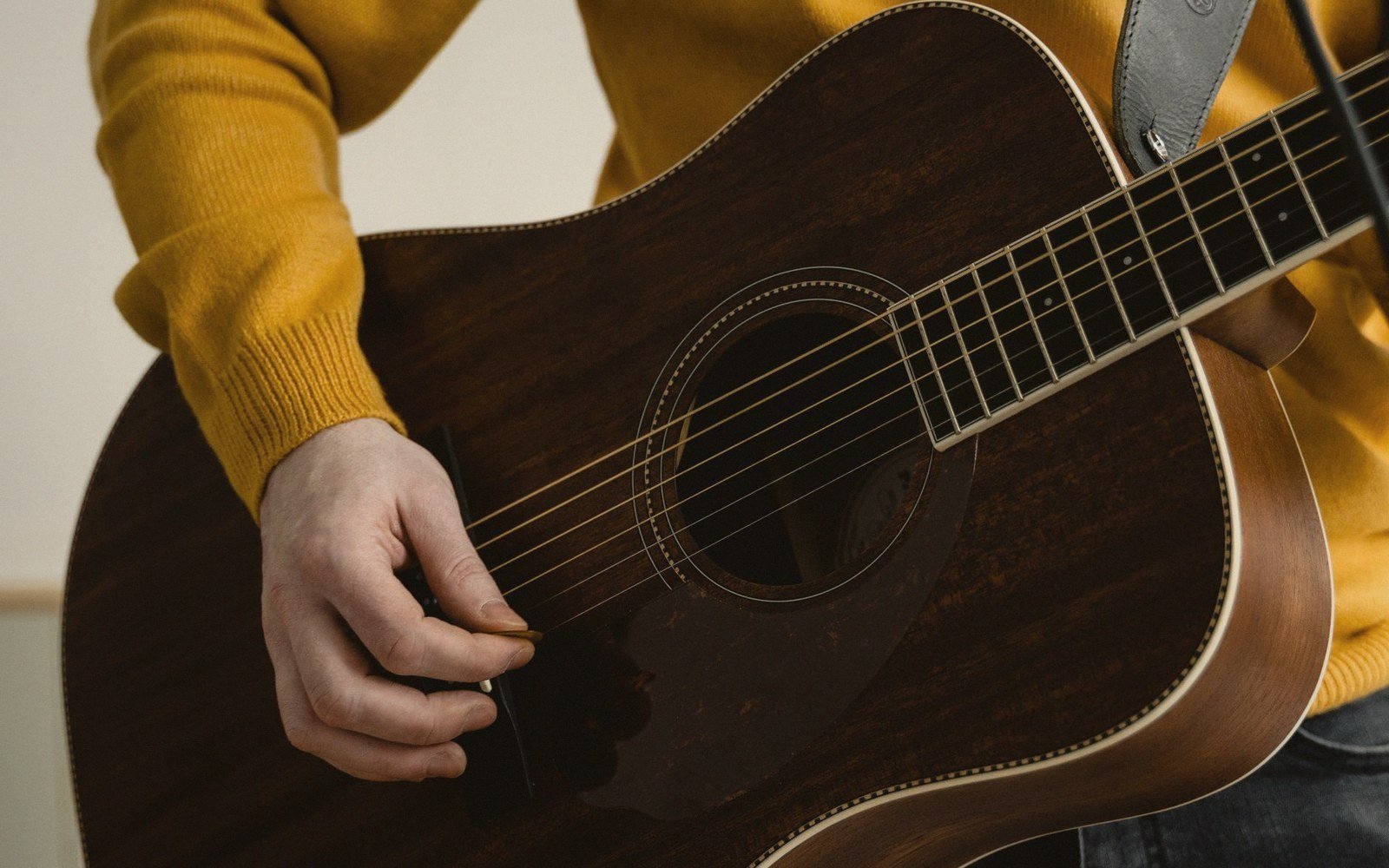
The right hand does not stop between breaks. What changes is which notes of the roll carry the tune.
The banjo doesn't rest. While every other instrument breathes — the mandolin on the downbeat, the guitar between runs, the fiddle at the end of a phrase — the banjo plays through the gap, on the beat, off the beat, and into the next bar without pause.
What the right hand is doing
The three-finger style that defines bluegrass banjo was codified around Earl Scruggs in the late 1940s, when he joined Bill Monroe's Blue Grass Boys. Before Scruggs, banjo playing was largely clawhammer — a downward stroke driven by the back of the nail — which sits in rhythm like a percussion hit. Three-finger picking is the opposite: the thumb, index, and middle finger move upward through the strings in sequences that can be maintained almost indefinitely without the hand stopping. The result is a rolling arpeggio — notes picked out of a chord in a consistent pattern, typically sixteenth notes at bluegrass tempo — that fills every available space in the bar.

A stage set for one microphone: the marks on the floor are the arrangement.
Photo: Wendy Wei / PexelsThe most common form is the forward roll: thumb on the fifth string, index on the second, middle on the first, then repeat. Variations — backward rolls, alternating rolls, pinches — colour the texture without breaking the momentum. What they share is continuity. The picking hand does not lift. There is no equivalent of the mandolin's closed-chord rest or the guitar's silent upstroke. The banjo runs.
What it does to the band
Because the roll is always present, the banjo occupies a register that nothing else fills the same way. The five-string banjo's highest pitched string — the short fifth string, a drone that sits above the other four and is struck repeatedly by the thumb — rings in a frequency range where the voice sits, and the effect is shimmer: a bright, percussive wash underneath the melody that isn't quite rhythm and isn't quite harmony. It locks to the beat without being the beat. It's moving through chord tones without being the lead line.
This means the banjo functions as motion. In a one-microphone setting, where the mix is made by walkingin and out from the microphone, the banjo player rarely needs to step forward for rhythm the way a guitarist might step back. The instrument is always producing something audible and useful — supporting the harmony, filling the gaps, turning over through the chords — which gives the soloist space to play melody over a bed that never goes flat or silent.
The roll also reinforces what no drums means in practice. Without a kit, there is no hi-hat to subdivide the beat into something continuous. The banjo roll performs exactly that function: a relentless sixteenth-note subdivision that gives the music its sense of forward momentum. Strip it out and the arrangement suddenly sounds wide open in a way that can feel sparse rather than spacious.
If it frets a passing shape for half a beat, those notes sound too, briefly.
Where melody enters
A banjo break isn't the roll stopping — it's melody notes appearing inside the roll, held above it or placed between the rolling subdivisions. Scruggs style inserts the tune at specific points in the pattern while the underlying mechanics continue. The melody is threaded through a structure that never fully rests, which is why bluegrass banjo breaks sound busy even when the tune is simple: the instrument is always doing at least two things simultaneously.
This is also why the banjo break tends to sound harmonically dense. Every note the right hand produces is a real pitch — there are no muted or neutral strokes — so the roll itself is constantly implying harmony. If the left hand frets a G chord, every note the roll produces belongs to that chord. If it frets a passing shape for half a beat, those notes sound too, briefly. The listener hears the melody but feels the chord, because the chord is being arpeggiated continuously beneath it.
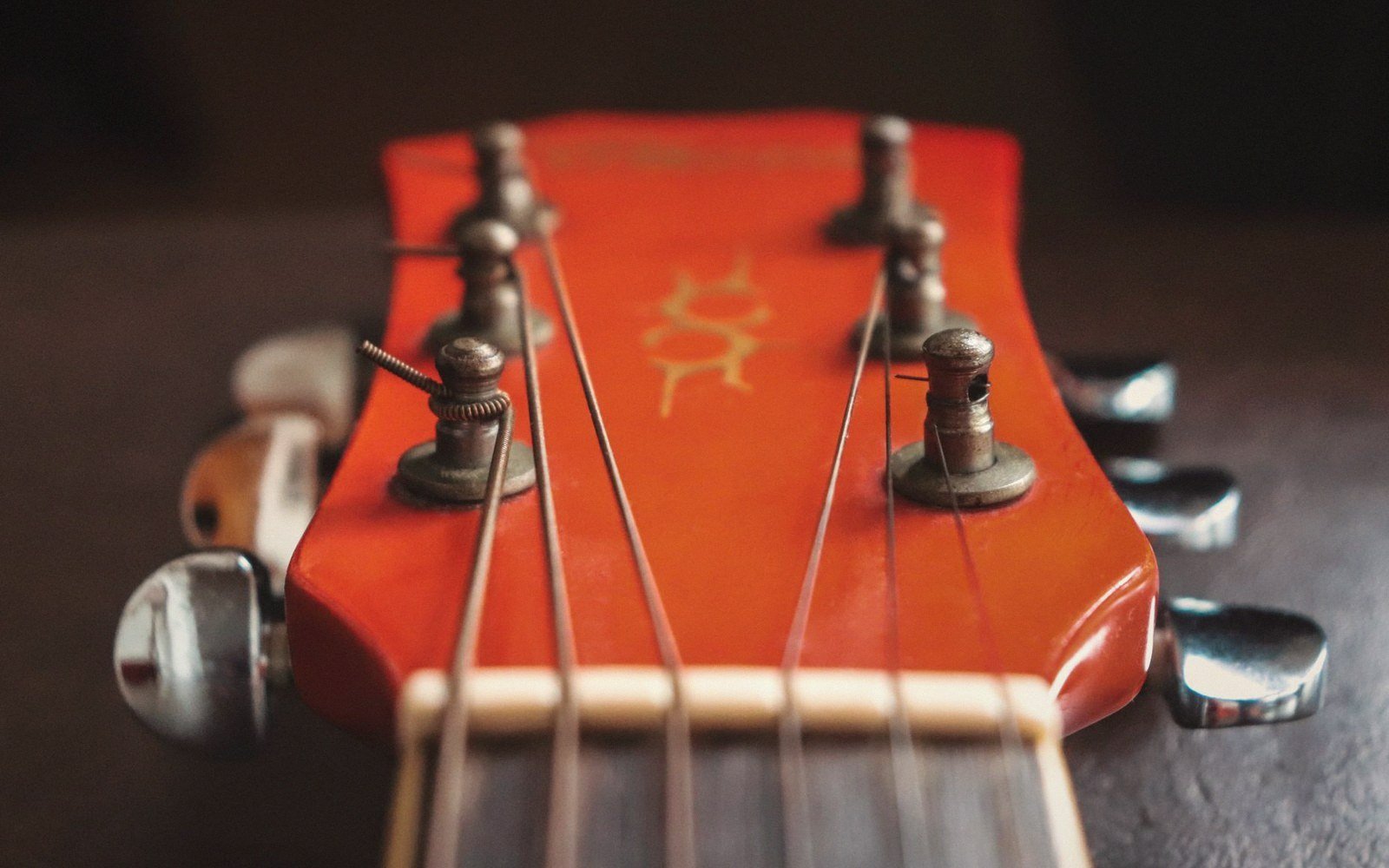
The metal cone under the top is what lets a resonator carry over a full band.
Photo: Harvey Tan Villarino / PexelsThe banjo doesn't decorate the music. It is the motion the music rides on.
Filed in The Instruments