
Live broadcast was the format the music was arranged for, and the clock was part of the arrangement.
The format the music was built for
Bluegrass did not grow up in concert halls or recording studios. It grew up in front of a single microphone in a broadcast booth, and the whole arrangement — instruments circling one mic, soloists stepping forward and back, voices stacked in close harmony — made sense first as a radio problem.
By the mid-1940s, the Saturday-night barn dance had been the dominant format for string-band and country music for nearly two decades. WSM in Nashville ran the Grand Ole Opry; WLS in Chicago ran the National Barn Dance; WWVA in Wheeling, West Virginia ran the Wheeling Jamboree. These were live shows, broadcast in real time to audiences measured in hundreds of thousands, and the performing unit had to be audible across all of it through a single ribbon or condenser microphone.
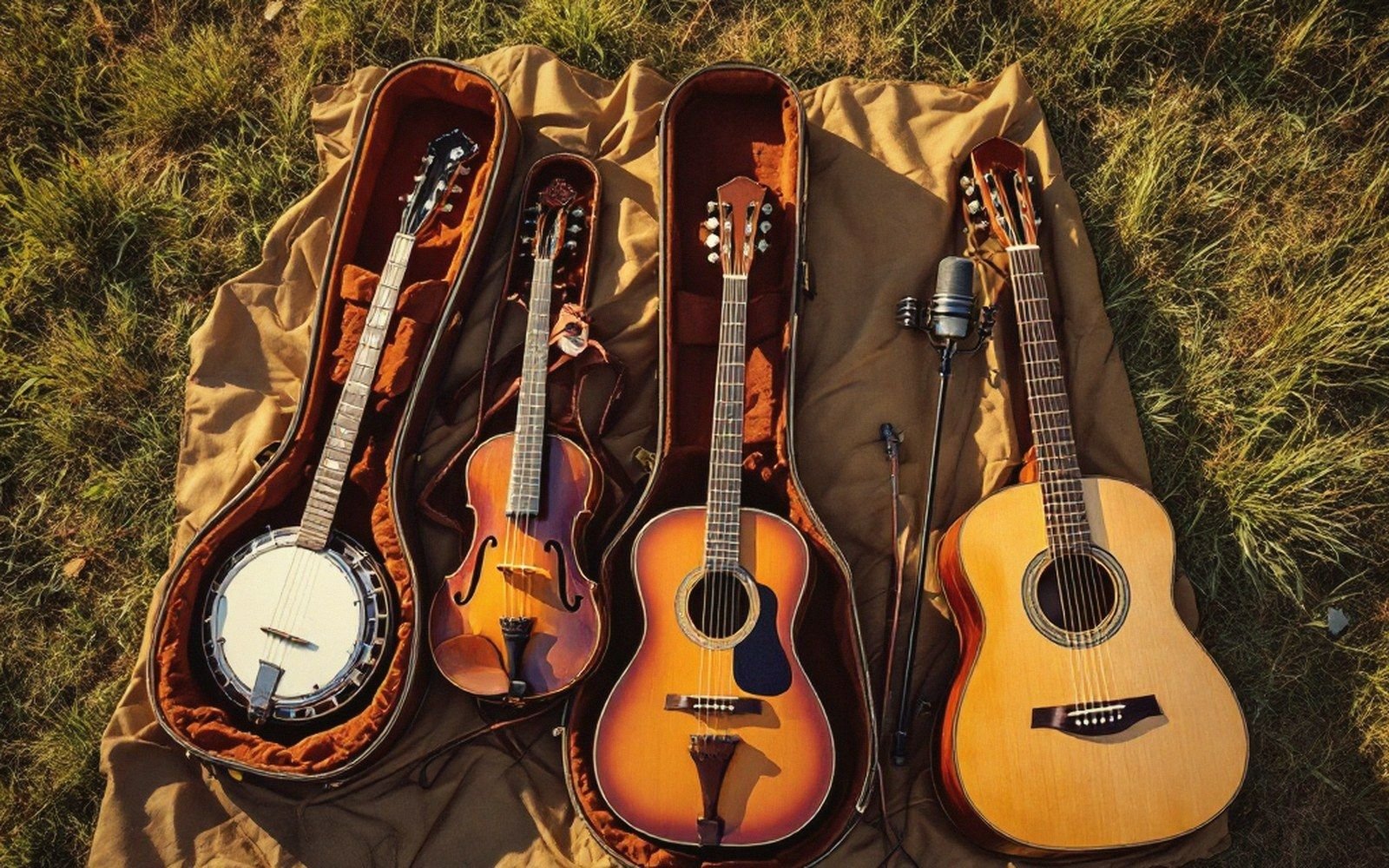
Five instruments, five jobs. In a standard band none of them doubles another’s work.
Bill Monroe brought his Blue Grass Boys to WSM and the Opry in 1939, and what the radio audience heard was the result of positioning rather than engineering. The bass played quietly and stood back. The banjo — once Earl Scruggs joined in 1945 — rolled continuously forward in the mix because Scruggs stood close, not because anyone turned up a fader. The mandolin's percussive chop cut through at medium distance. When a singer stepped to the mic for a solo verse, the other players shifted slightly. The mix was a choreography, and the radio listener received it as a balanced ensemble.
This mattered in a specific technical way. AM radio in that era compressed the dynamic range of a signal and rolled off the extreme frequencies at both ends. A performance arranged for one mic — where the loudest element at any moment was whoever had moved forward — translated cleanly. There were no phase problems from multiple close-mics, no bleed between channels, no fader to misread. What arrived at the transmitter was already a finished mix.
The recorded 78s of the period were shaped by the same logic, because most were cut live to disc in essentially the same setup. Radio and early recording were not separate disciplines; they used the same room, often the same microphone, and the same physical discipline from the players. A band that could hold a broadcast together in one take could cut a side in the same session.
When television began drawing the barn-dance audience away in the 1950s, bluegrass moved partly to smaller, regional radio — border stations, early FM, college broadcasts — and it carried the one-mic aesthetic with it. The format had by then stopped being a technical constraint and had become the music's own definition of what a band should sound like.
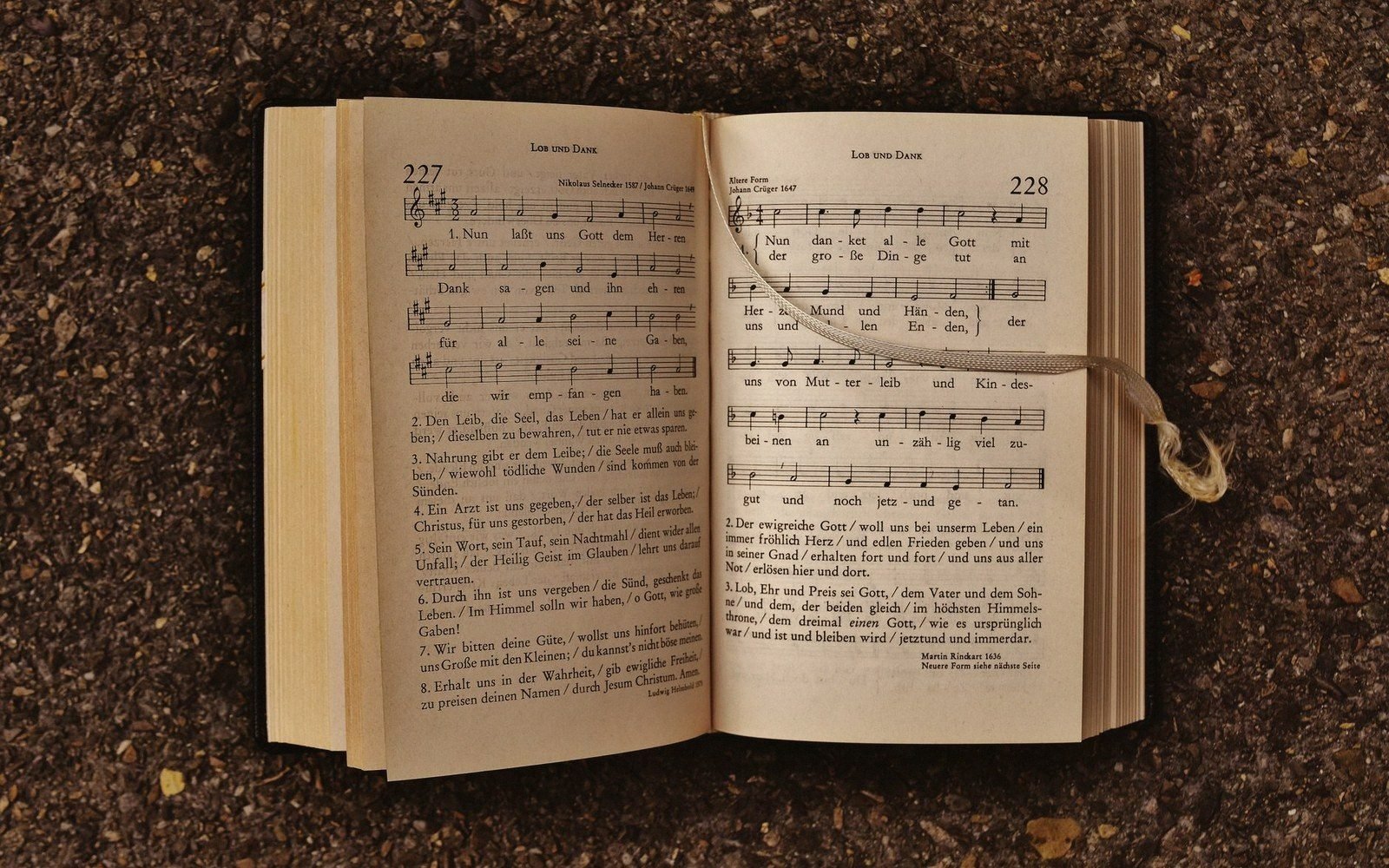
Printed collections record the repertoire. They do not define it.
Photo: Pixabay / PexelsFiled in The Record