
Played through, kept as played. The tradition is not to fix it afterwards.
One performance, from first note to last, with whatever happens in between.
The record is the room
Before multitrack recording existed, a band had no choice: you played it through, the lacquer cut, and that was what you had. By the time bluegrass was being committed to disc in any quantity — the late 1940s and into the 1950s — the technology to splice and overdub existed, but the music had already formed around the idea of a live, complete performance. The habit stuck.

The chairs face inward because the circle, not a stage, decides who plays next.
Photo: K / PexelsWhat a single take captures is something that cannot be assembled in pieces: the breathing of five people locked into a tempo together, the slight lean into a chorus, the moment a tenor finds the pitch of a chord as it arrives rather than before it. These are not accidents the producer tolerates. They are the content. The performance has a shape — tension rising through a break, a vocal trio landing after the instrumental verse — and that shape only exists if it unfolds in real time, nobody jumping in from a different afternoon.
There is also a practical argument. Bluegrass arranges itself around a single microphone, which the players move toward and away from to balance the sound. That movement is itself a performance, calibrated to what the other players are doing right now. Cut the audio into sections and you lose the spatial logic; the recorded mix stops making sense.
The tradition imposes its own discipline. If a phrase can only be fixed by stopping and starting again, the players fix the phrase before they record it. Rehearsal does the work that editing would otherwise do. What reaches the microphone is already the best version the band can play, not the best assembly of many partial attempts.
The single take also explains why early bluegrass recordings feel immediate in a way that later, more processed records sometimes do not. Nothing is smoothed out that wasn't smooth to begin with. You are hearing five musicians in a room, playing it through, and whatever lives in that is what you get.
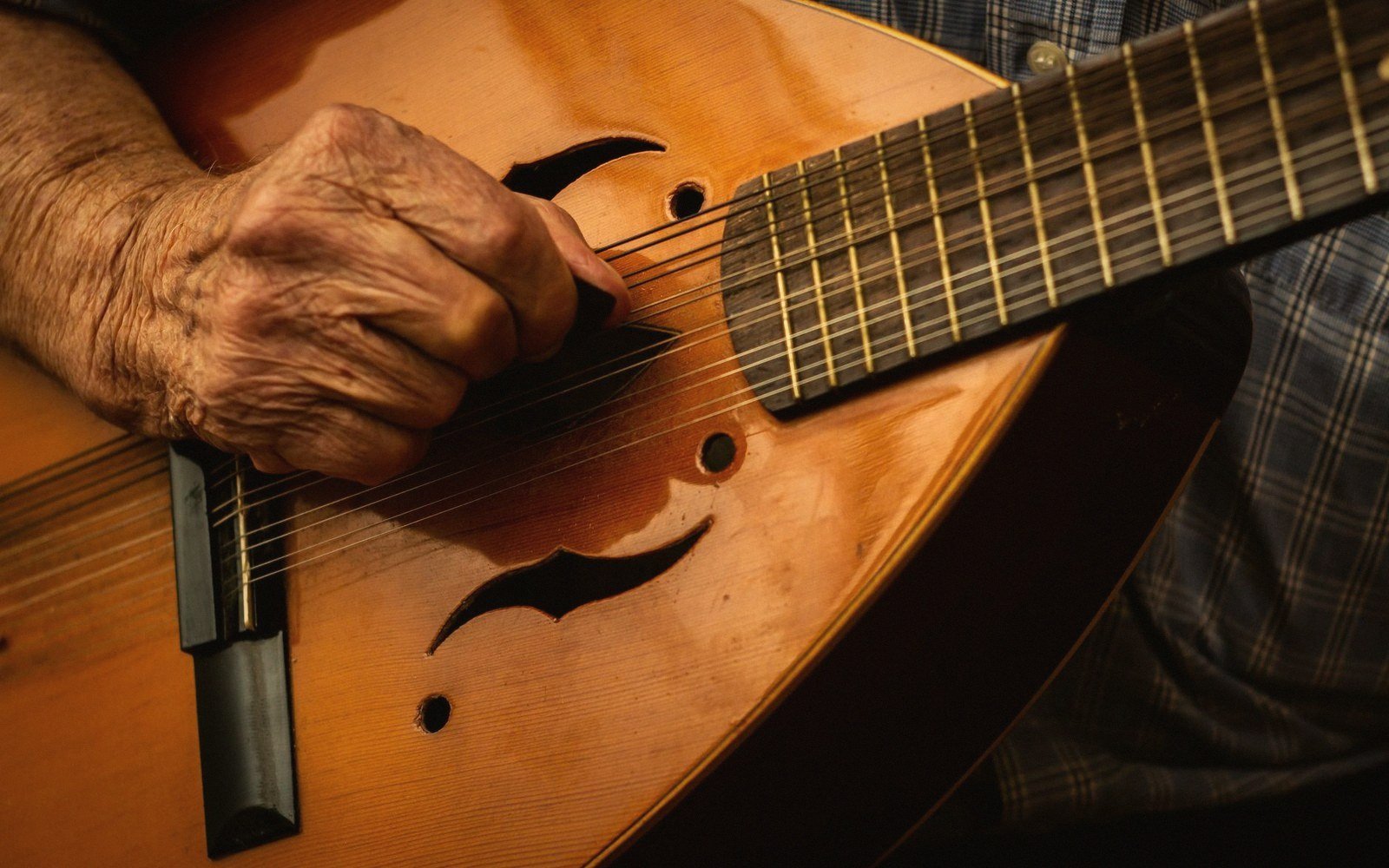
The mandolin’s short, damped chord does the work a snare drum does elsewhere.
Photo: Marcelo Renda / PexelsFiled in The Record