Close mics changed it
Isolation made the mix editable and quietly removed the reason to move.

Isolation made the mix editable, and quietly removed the reason to move.
Isolation made the mix editable and quietly removed the reason to move.
The moment everything shifted
The original bluegrass recording setup was not a choice — it was a constraint that became a technique. One microphone in a room, five players moving toward it or away from it to balance themselves in the sound. When Bill Monroe's early sides were cut that way, the physical choreography was the mix. Nobody sat at a fader adjusting anything; the players adjusted themselves.
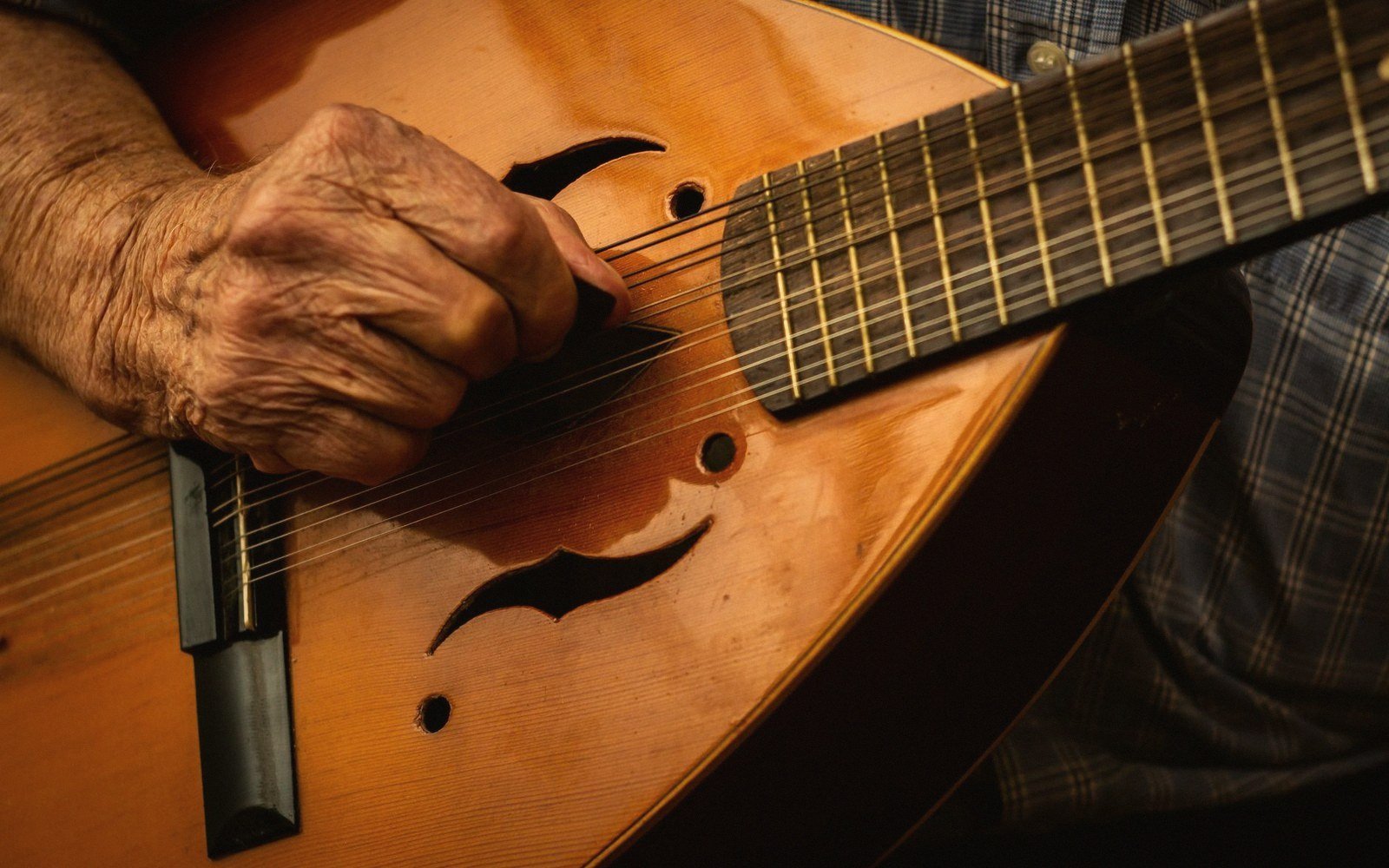
The mandolin’s short, damped chord does the work a snare drum does elsewhere.
Photo: Marcelo Renda / PexelsClose-miking changed the logic entirely. When each instrument gets its own capsule — one on the banjo head, one clipped near the mandolin's f-hole, a pair of small-diaphragm condensers overhead, a direct line from the guitar — every source arrives at the console separately, with its own fader, its own EQ, its own place in a stereo field the engineer draws in post. The blend stops being something the band negotiates with their bodies and becomes something the producer assembles afterward.
The result is cleaner, in strictly technical terms. Bleed between instruments drops. Tuning errors can be isolated and corrected. A stray finger squeak on the guitar neck no longer lives permanently in the banjo track. The tools that came with multitrack recording — first four-track in the 1960s, then sixteen, then unlimited — made all of this possible, and Nashville studios applied them to bluegrass the same way they applied them to everything else.
What quietly disappeared was the reason to move. The mix is made by walking toward the microphone for a break and backing off underneath a vocal — that physical discipline, which shaped the music's live performance for decades, becomes ornamental in a close-miked session. The engineer can simply push a fader. Some producers kept the single-mic aesthetic as a stylistic choice, recording bands around one room mic to preserve the blend and the movement. But the default shifted. The room mic, when it appears at all in modern sessions, is often just one element in a wider picture rather than the governing source.
The sound changed with the logic. Close-miked bluegrass tends to sit each instrument in its own defined pocket — banjo bright and present on the right, mandolin sharp and cutting in the center, guitar warm in the low-mid. It is detailed and legible in a way that a single-mic recording is not. What it sometimes loses is the sense of a band playing together in a room, the slight pooling of sound that happens when instruments share air and a single point of capture. Whether that pooling is warmth or mud depends on which record you are playing and how loud you have the speakers.
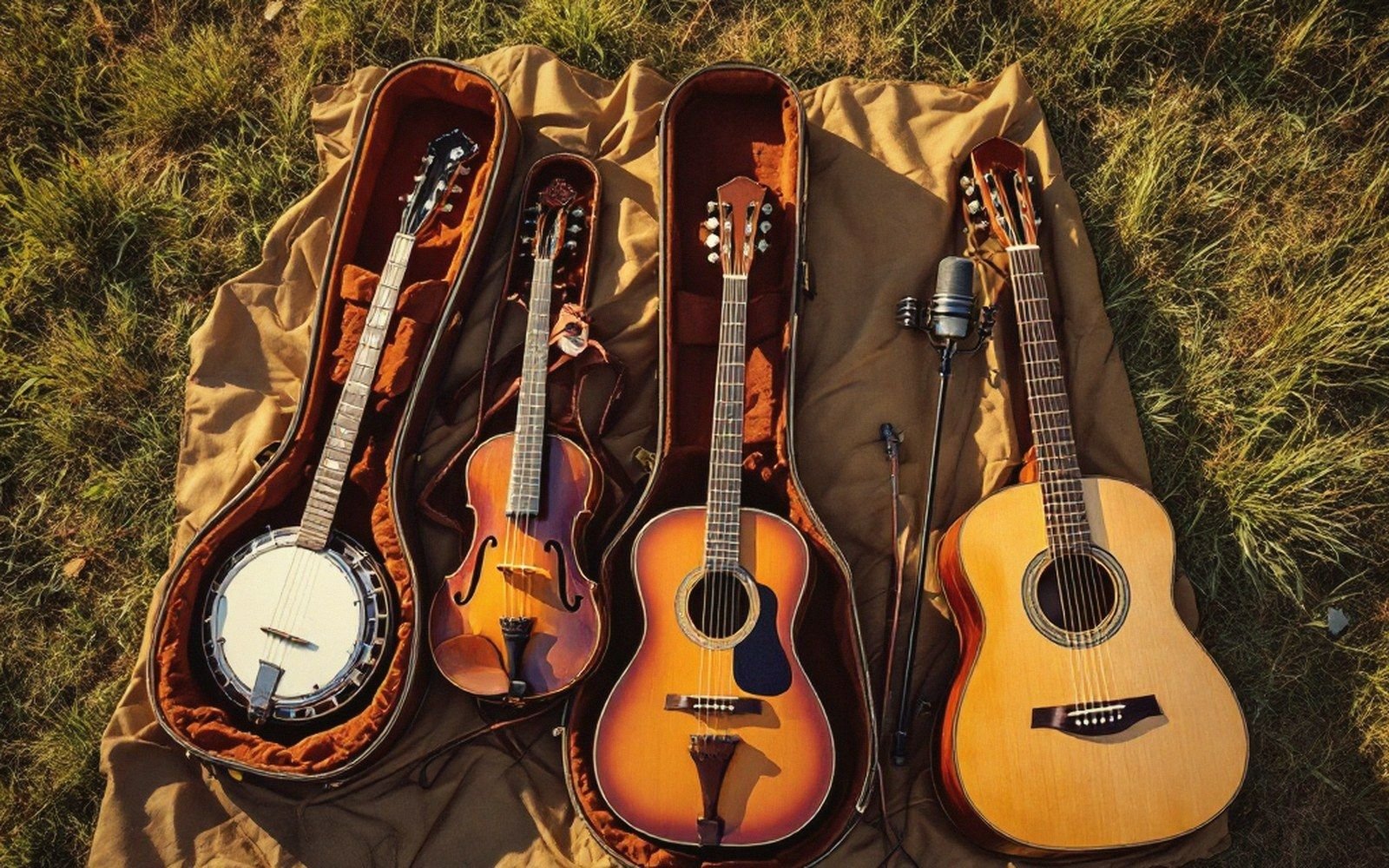
Five instruments, five jobs. In a standard band none of them doubles another’s work.
Filed in The Record