Stacking above the melody
The lead sings the tune and the tenor sits above it, which is the opposite of most popular harmony and produces the characteristic strain.

The lead sings the tune and the tenor sits above it, which is the reverse of most popular harmony.
The lead carries the tune; the tenor adds a part that sits higher — which is not how most harmony works, and it is where the characteristic ache comes from.
How the stack is built
In most popular music, harmony means one voice a third below the melody. The lower part softens the tune and widens it, and the blend tends toward warmth. Bluegrass reverses the architecture. The lead sings the tune, and the tenor — usually the highest voice in the group — finds a part that sits above it, sometimes a third up, sometimes a fourth or a sixth, depending on what the chord will bear. The result is a harmony that does not soften the melody but stretches it. The strain is built into the arrangement from the first note.

Five instruments, five jobs. In a standard band none of them doubles another’s work.
That upward interval is not a cosmetic choice. The tenor note is frequently close to the top of the singer's usable range, and it is placed there deliberately. When two voices lock a third apart and the upper one is the added part rather than the given tune, the ear hears the melody differently — the lead sounds exposed, almost leaned on, and the harmony seems to be pulling it upward rather than cushioning it from below. Combined with the tendency to push those parts into the high register, the overall effect is luminous and taut at the same time. This is what people are responding to when they describe the high lonesome quality without being able to say exactly why.
Where the intervals come from
The shapes come partly from shape-note gospel singing, which was deeply embedded in the rural South by the time Bill Monroe and his collaborators were consolidating what would become the bluegrass style in the 1940s. Shape-note practice trained singers to read and to hold independent parts above and below the melody — the treble voice in a Sacred Harp setting often sits above the tune in exactly this manner. The mountain secular tradition brought similar habits. By the time Monroe's Blue Grass Boys were broadcasting on WSM out of Nashville, the high tenor was already understood as the characteristic color of the style.
The choice of interval shifts phrase by phrase, following the chord movement underneath. On the root of the chord, a third above the melody is the standard approach. When the chord shifts, the tenor may jump to a fourth or a sixth to stay consonant, which produces the sudden widening of the sound that is one of the most recognizable moments in a bluegrass chorus. These jumps feel emphatic rather than smooth, partly because the voices do not glide between them and partly because the chop underneath punches on the offbeat and holds nothing, so the harmony intervals are exposed without the softening effect of sustained accompaniment.
What you are hearing in the room
At one microphone, the tenor has to be physically close to earn its place in the mix without overwhelming the lead. The lead singer tends to own the center position; the tenor leans in from the side. Because neither voice is separately amplified and equalized, the blend depends entirely on breath control, vowel matching, and the balance the singers achieve by where they stand. When it works — when the vowels align and the spacing is right — the two parts fuse enough that the ear almost hears a single instrument playing two strings simultaneously. When it does not, the tenor sticks out like a finger pointing somewhere the lead is not going.
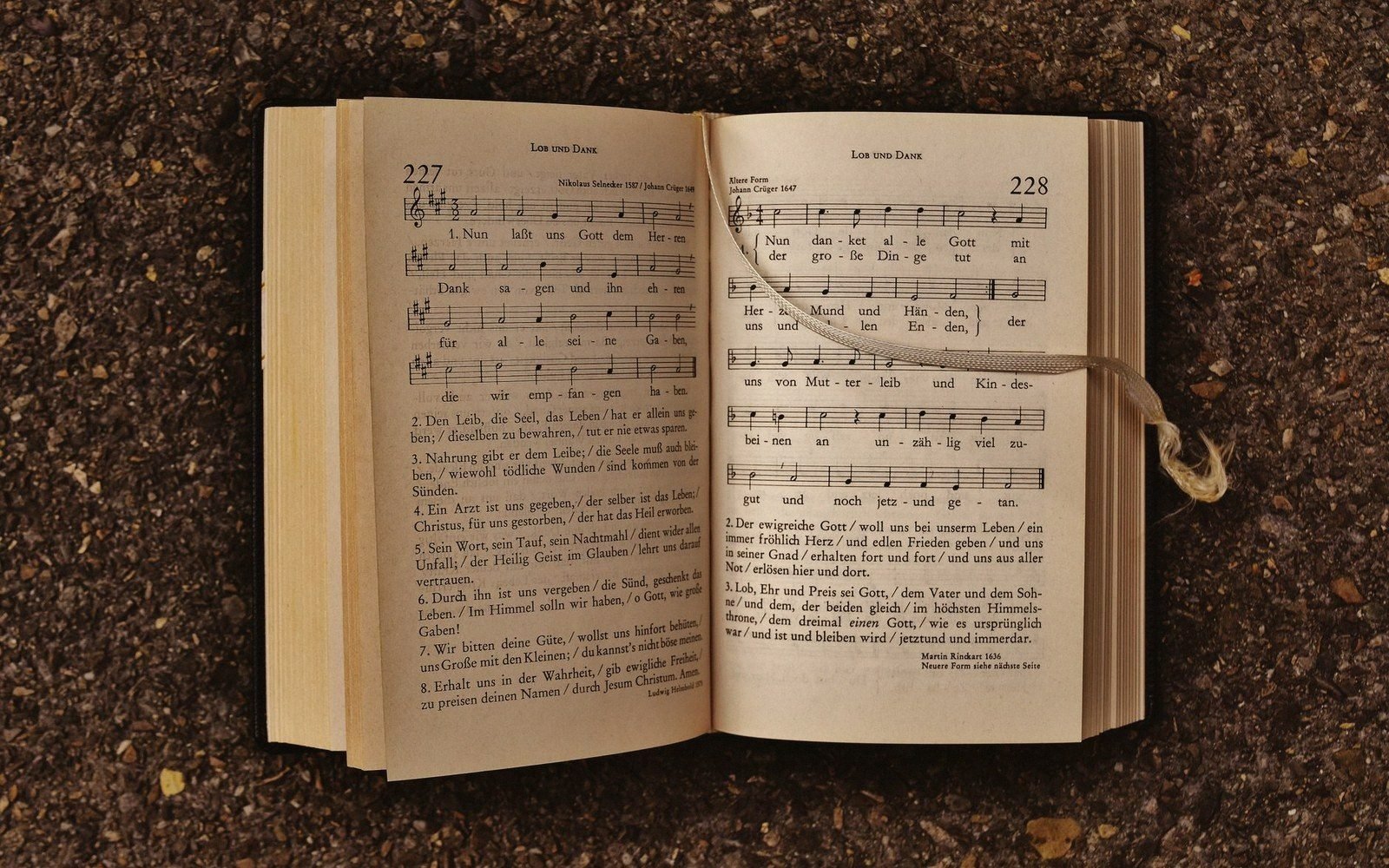
Printed collections record the repertoire. They do not define it.
Photo: Pixabay / PexelsThe two-part tenor-and-lead stack is the minimum form. Bands that add a baritone below the lead, or a bass below that, are building outward from this central relationship rather than changing its character. The tenor is still the defining voice — the part that gives the arrangement its particular color. Take it out and the sound drops back into something that resembles any number of other rural traditions. Put it back in, up high, a hard third above a melody that is already near the top of a comfortable range, and you have the thing itself.
Filed in The Harmony