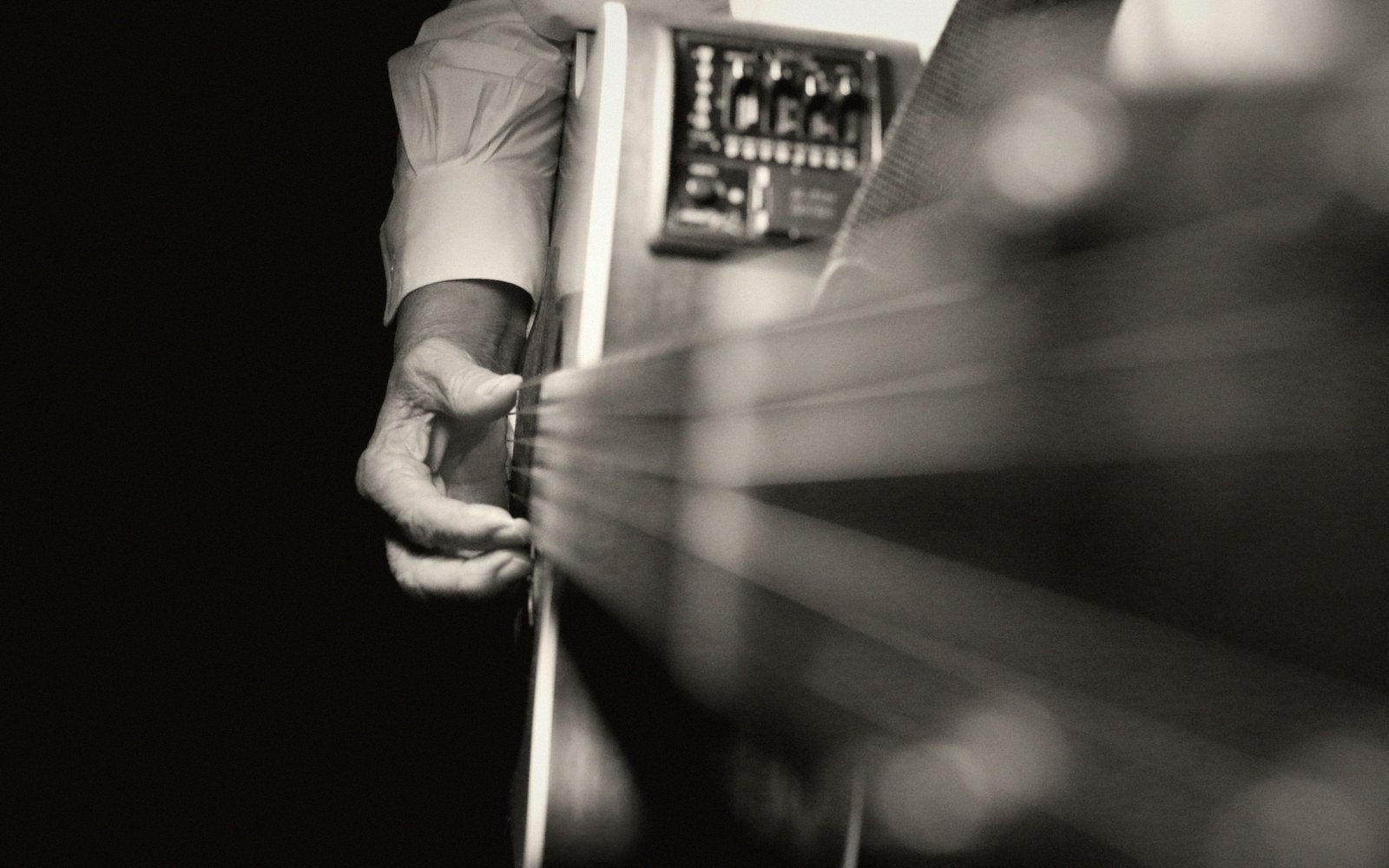
The fretting hand relaxes as the pick lands. What is left is attack with almost no sustain.
The percussive chord that holds the groove
In a band with no drums, something has to mark two and four. The mandolin does it — not with a melodic note, but with a thud: a damped chord hit precisely on the offbeat, released immediately, producing a short burst of attack with almost no sustain. Players call it the chop.
The mechanics are simple to describe and difficult to master. The fretting hand forms a chord — usually a full four-string shape — but rather than holding it open, the fingers relax the instant the pick strikes, muting the strings as they sound. The result is a percussive click with a ghost of pitch underneath, something between a snare hit and a woodblock. The instrument's hollow body gives it body; the quick mute gives it snap.
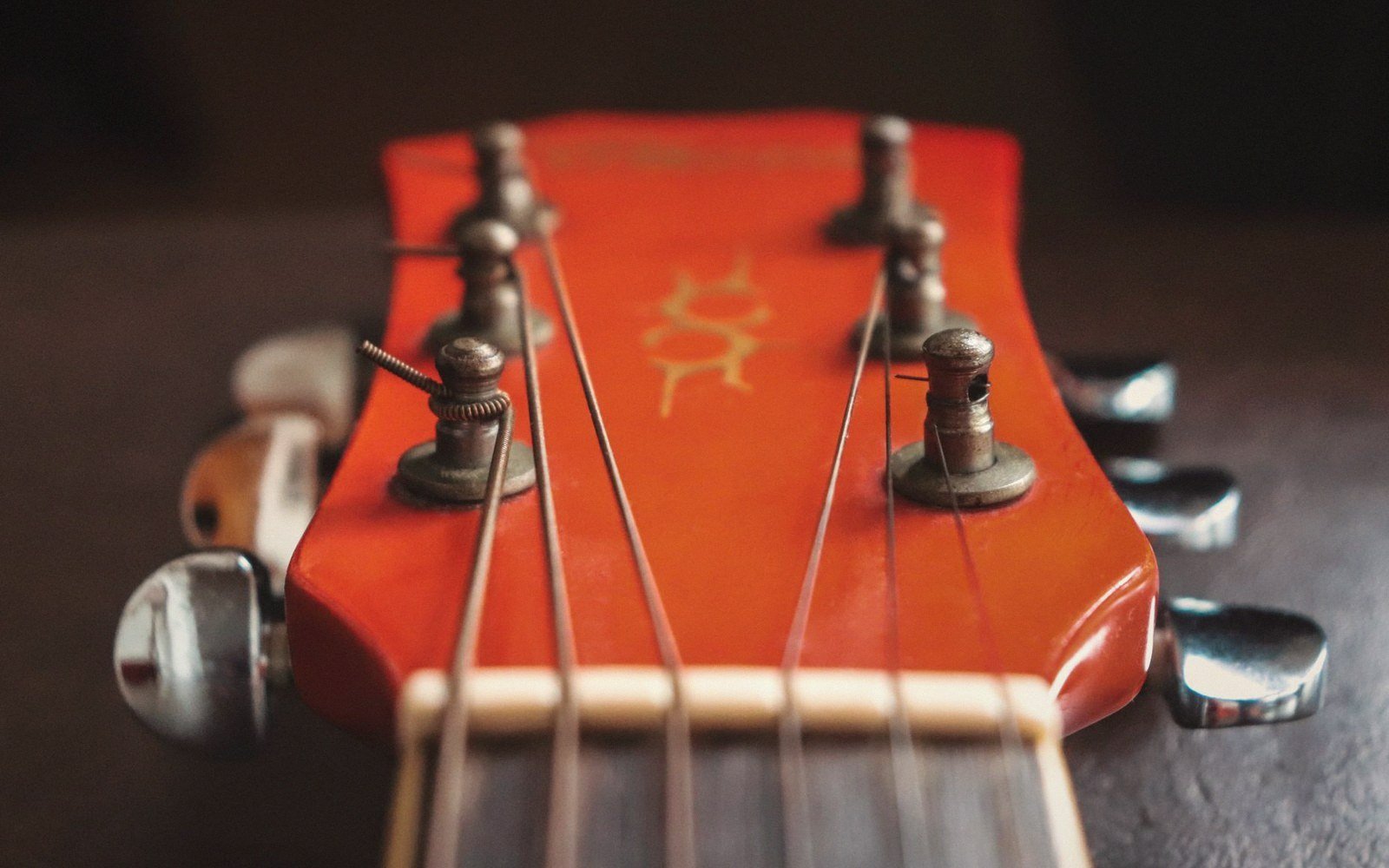
The metal cone under the top is what lets a resonator carry over a full band.
Photo: Harvey Tan Villarino / PexelsWhat the chop does to the band is structural. Bluegrass sits in a pulse of four, with the bass note on one and three and the chop landing on two and four. That backbeat is where popular music almost universally puts the snare drum. Without one, the mandolin provides the rhythmic skeleton that tells everyone else where they are — including, critically, the singers. Lose the chop and the groove loses its spine.
In the texture of the full band, the chop sits differently from any other part. The banjo roll is continuous and forward-moving, the guitar bass runs connect the beats, the fiddle sings in long phrases. The chop punctuates. It is the only element in a standard bluegrass arrangement that is purely rhythmic by design, carrying no melodic information at all. When the mandolin player is not taking a break, this is almost entirely what they are doing.
The tone of the chop varies with the player's touch, the instrument's weight, and the tension of the strings, but the function is constant: it has to be loud enough to cut and short enough not to crowd. In a festival circle — players close together, no amplification — the chop carries the center of the circle the way a snare carries the center of a stage mix. The musicians feel it in their bodies before they hear it with any analytical attention.
That physical immediacy is why the part matters. Mandolin is often discussed in terms of its melodic role — the break, the tremolo melody, the double stops. The chop reminds you it is also the drum.
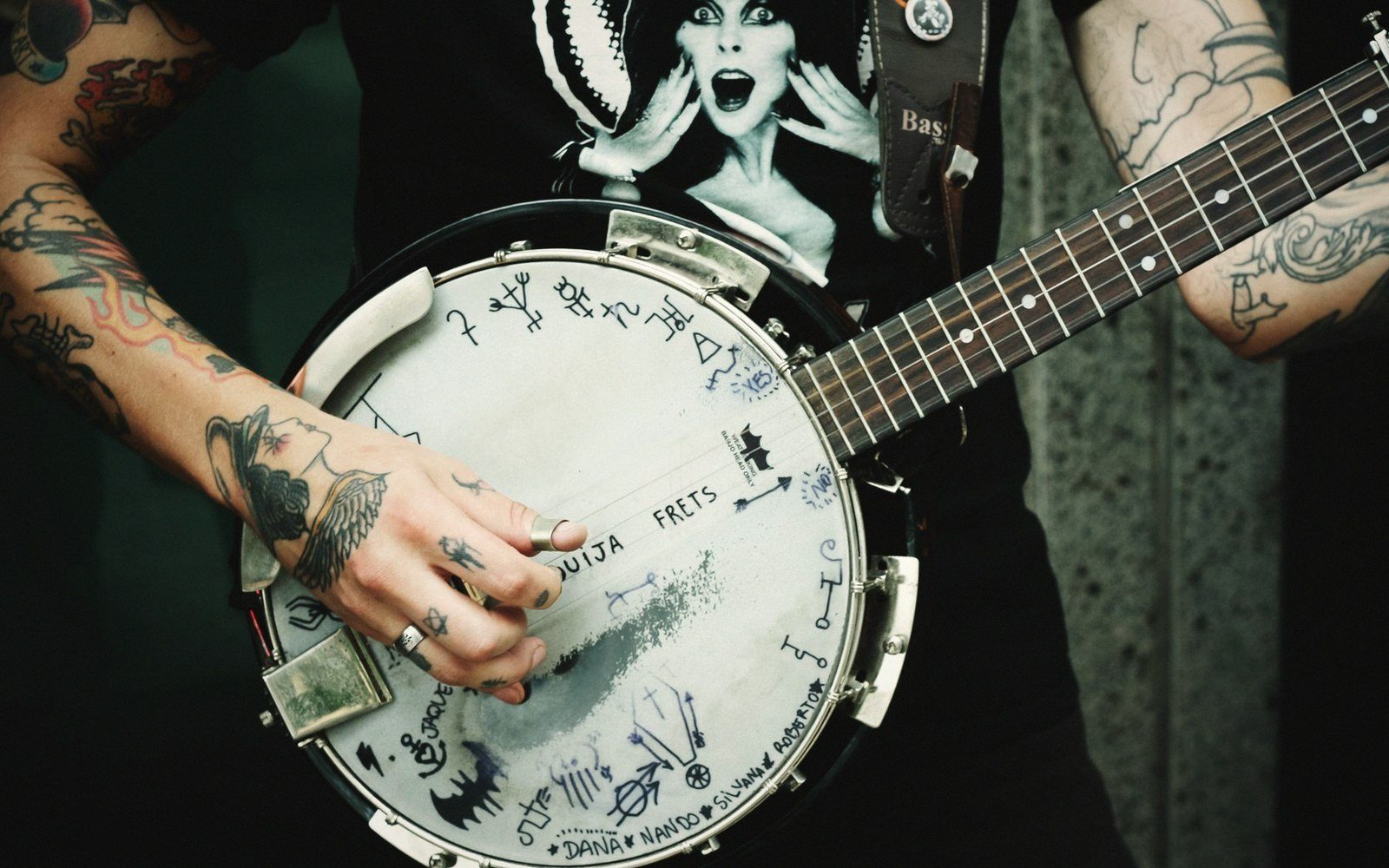
The head is a drum. It is also why the banjo player stands furthest from the microphone.
Photo: Matheus Ferrero / PexelsFiled in The Instruments