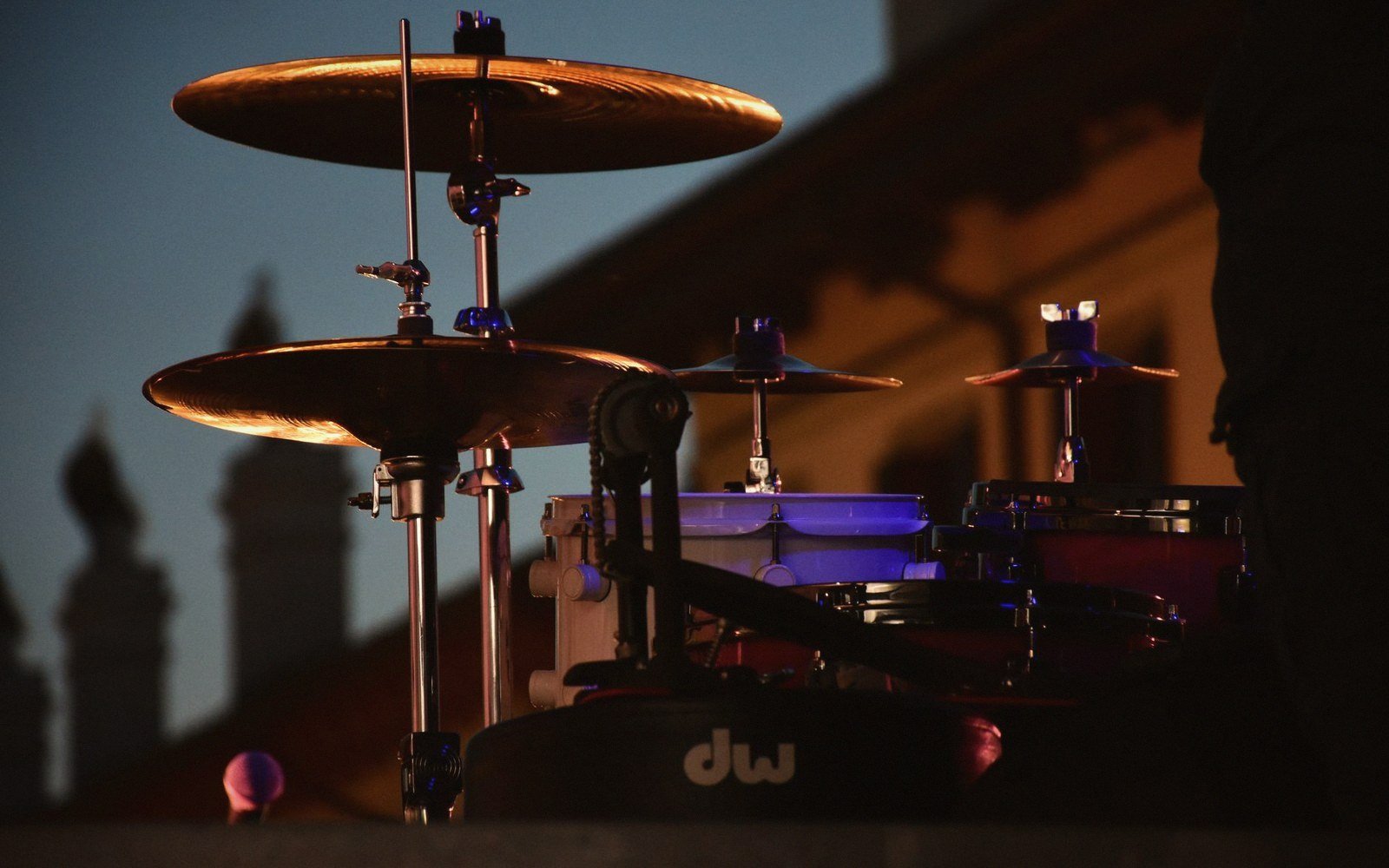
The rhythm section is a mandolin, a bass and a guitar dividing a job a drummer would hold alone.
The percussion is already there — spread across four instruments
Bluegrass has no drum kit. This is not an oversight. When Bill Monroe assembled the sound in the mid-1940s, he was working inside a string-band tradition that had always kept percussion out of the picture, and the microphone they all shared made the decision irreversible: a snare hit would have blown the thing apart.
What fills the role is not one instrument but a system. The chop does the heaviest lifting — a mandolin player dampens the strings and strikes a closed chord hard on beats two and four, the same beats a snare drum would crack. It lands like a slap, and in a live room you can feel it. That is the backbeat, handled entirely by a plucked instrument.
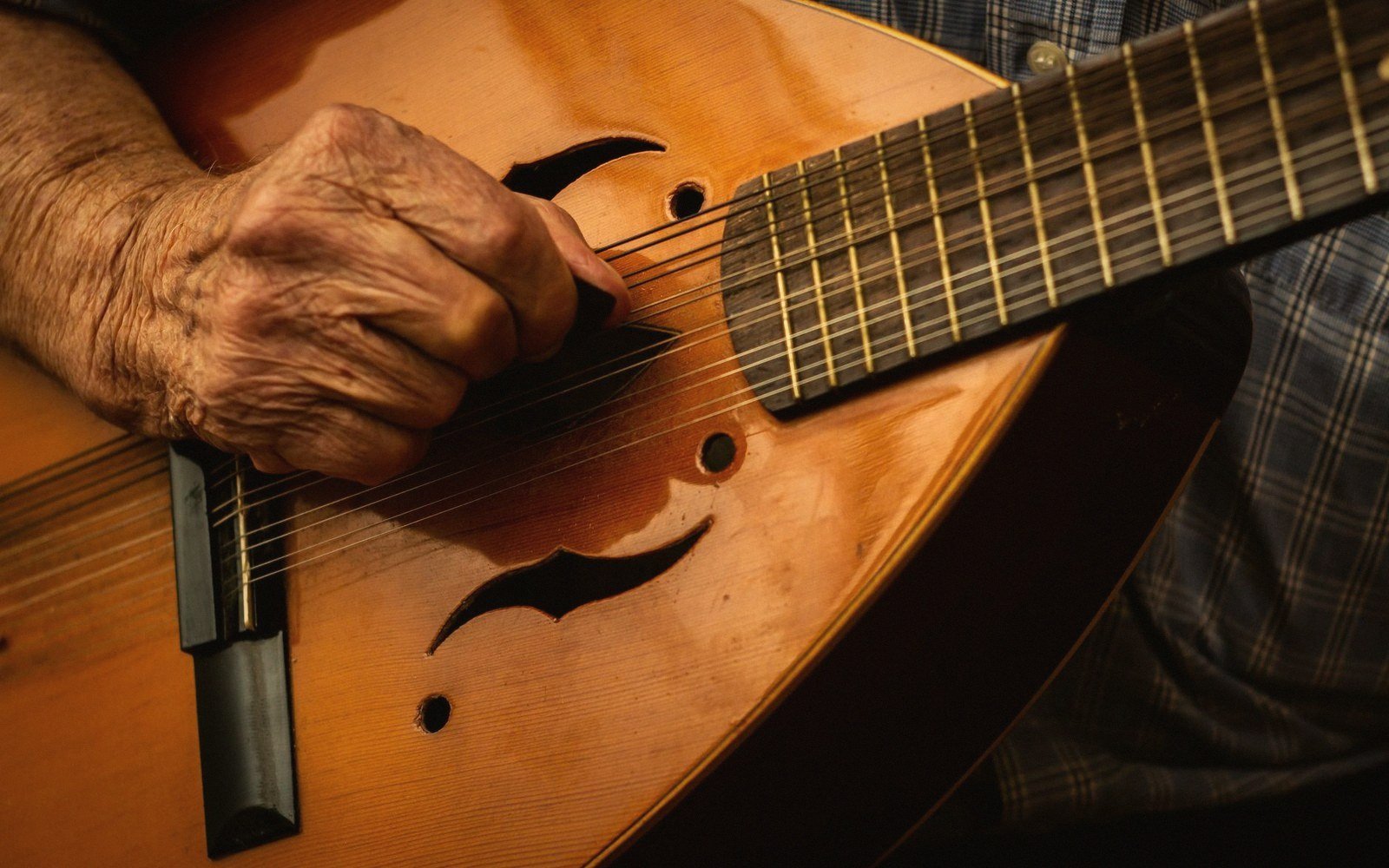
The mandolin’s short, damped chord does the work a snare drum does elsewhere.
Photo: Marcelo Renda / PexelsThe banjo supplies the rest of what a drum kit would call the hi-hat or the ride: a continuous, metronomic stream of eighth notes, three fingers cycling through the strings in a rolling pattern so steady it functions as a pulse rather than a melody. Everything else in the arrangement floats on top of that roll.
The bass does something closer to what a bass drum might do in another genre — a low boom on beat one, bass runs connecting chord changes, the whole low end holding the floor. Without the bass's weight, the ensemble would have no foundation, only treble.
And then there is the rhythmic dimension of phrasing itself. Fiddle lines, vocal entries, the way a break begins or ends — timing in bluegrass is felt collectively, and every player is constantly listening to every other player to stay locked in. There is no drummer to follow. The grid is maintained by agreement.
The result is a kind of distributed percussion: no single instrument owns the timekeeping function, but collectively they never drop it. The absence of a drum kit is audible only in the sense that the sound is dryer, more transparent, more immediate — nothing between the strings and the air. Once you hear it as a system rather than as a missing piece, the silence where the kit would be starts to sound like the point.
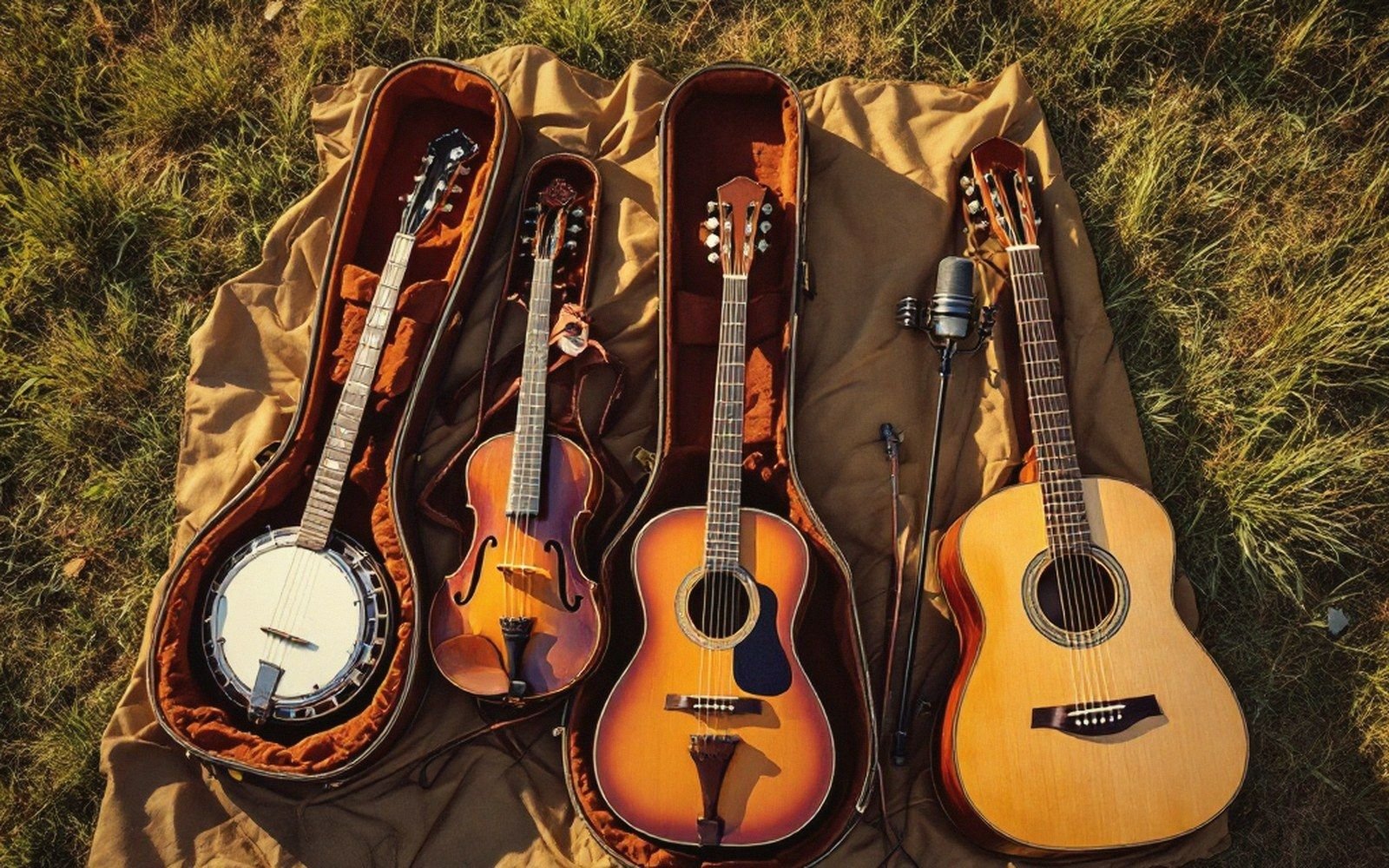
Five instruments, five jobs. In a standard band none of them doubles another’s work.
Filed in The Instruments