The car park jam
The parallel event to any festival: circles of players in the campground, open to anyone who can hold the form.
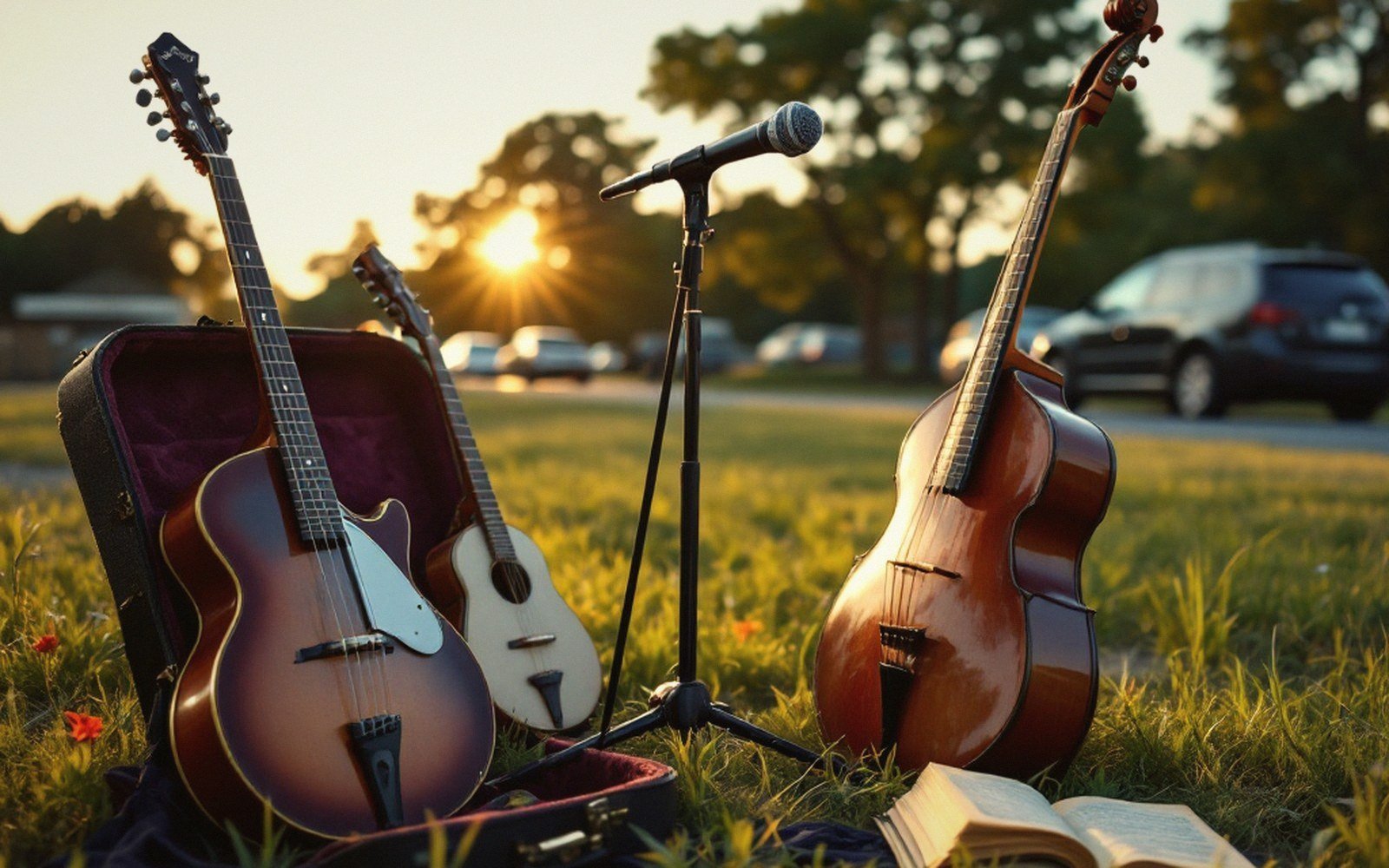
The circle runs in parallel with whatever is on the stage, and it runs considerably later.
When the stage goes dark, the real playing begins — in the car park, the campground, anywhere two instruments can find each other.
The circle that forms itself
No one announces the car park jam. There is no schedule, no lineup, no MC. Someone opens a case, someone else walks over, and within twenty minutes there is a ring of players around an invisible microphone that no one has put there. This is the other event at any bluegrass gathering — the one that runs from dusk until well past the point when the responsible people have gone to bed.
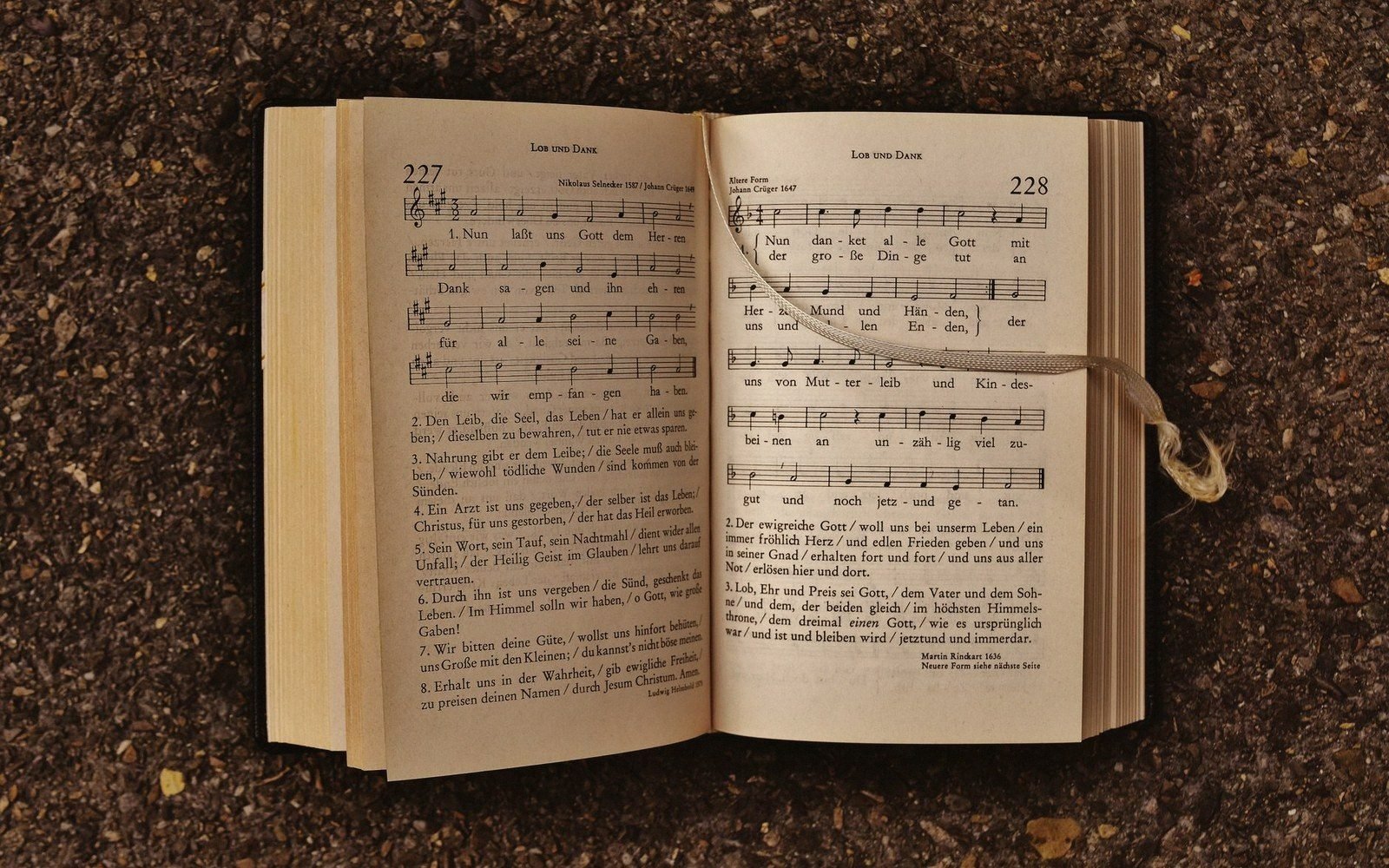
Printed collections record the repertoire. They do not define it.
Photo: Pixabay / PexelsThe car park jam is not a performance. It is a practice, in the older sense of the word: a repeated doing that keeps a tradition in working order. The circle self-selects. Anyone carrying an instrument is implicitly invited. The etiquette is unwritten but reliable — you wait for a gap, you join on the chord, you take your break when it comes around to you and you do not stretch it past the point where the circle wants it back. What keeps the whole thing running is a shared understanding of form, the verse-chorus architecture and the standard changes that songs everybody knows provide. A stranger from three states away can step into a circle and be useful inside of one song, because the repertoire is held in common.
The microphone question is simply dissolved. No one is amplifying anything, which means no one has to think about feedback, placement, or whether the fiddle is washing out the mandolin. The relative volumes are whatever the players and the night air make them. A loud mandolin chop will dominate; a player who knows this will ease off. The balance is social before it is musical, and the circle has a way of correcting imbalances by quietly repositioning — people drift into the gaps they are needed in.
Who calls it and how
Whoever speaks up first calls the tune. That authority is temporary and it rotates. In practice, the most experienced player in the circle often sets the first key and the tempo, not by announcing anything but simply by starting — the room, or the car park, follows. From there the calling moves around, and a well-run circle lets everyone contribute to the repertoire. A jam that gets locked into one caller's preferences will narrow quickly; the best ones stay catholic about material, moving from a Carter Family hymn to a Don Reno instrumental to something learned off a record last week.
Tempo is the discipline that separates a useful car park jam from an indulgent one. Without a drummer — bluegrass carries no drums, by design — the pulse has to be agreed on and held by the players themselves. The guitar holds the floor in terms of pulse, the bass sitting below it providing the lowest anchor. The banjo roll runs continuously and cannot decelerate gracefully, so a tempo set too fast early in the night becomes a problem as tiredness sets in and the tunes get harder. The best car park jams run at the speed the least confident player in the circle can manage cleanly, which is exactly what the slow jam makes deliberate.
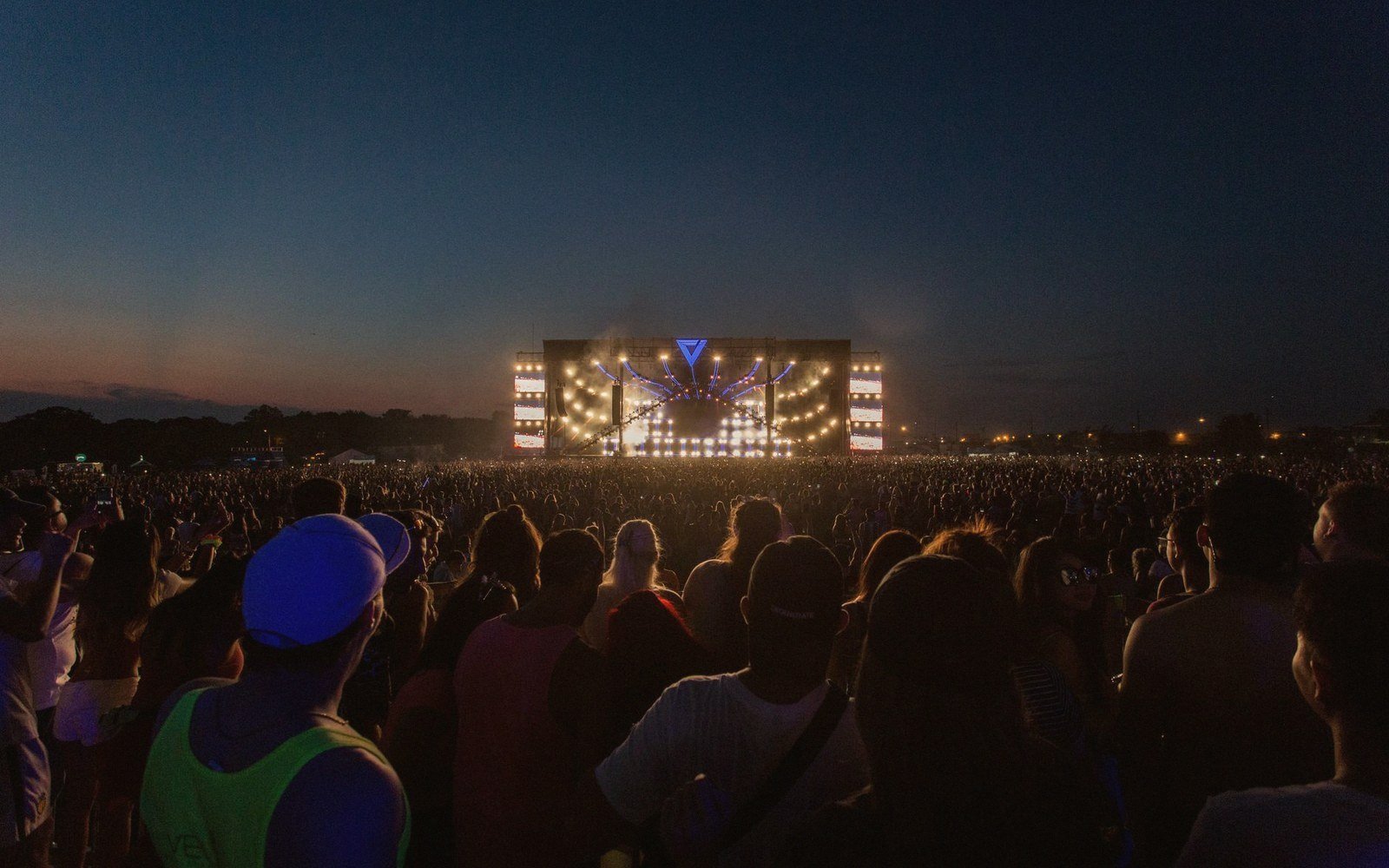
A stage set for one microphone: the marks on the floor are the arrangement.
Photo: Wendy Wei / PexelsThe social function is not incidental. Car park jams are where players at the early stages of the tradition encounter players who have been at it for decades, in an arrangement where the exchange is horizontal — you are just people in a circle, and the music is what you are both there for. A beginner who can hold the chop steady and stay out of breaks they are not ready for is a welcome presence. The tradition passes this way, in real time, without any formal instruction taking place.
After the lights come on
The car park jam does not end cleanly. People peel off one at a time, or all at once when the cold finally wins, and the last tune trails off rather than concludes. The circle leaves no trace except that several people have played something they had not played in years and remembered it, and several others have learned something without knowing they were being taught. In the morning, the conversation in the breakfast queue will be about what was played the night before. The stage show was the event on the poster. This was the event people came for.
Filed in The Circle