
The choice rotates around the circle, which is why the repertoire stays wide rather than deep.
In a circle, the right to pick a song passes with the break — and that rotation quietly shapes everything played.
The turn belongs to whoever just soloed
Nobody announces the next song. The standard practice is simple: you take your break, and at the end of it you name something — or you start playing it and the circle finds you. The right to call rotates with the lead voice and the instrumental solo, so over the course of an evening every player has an equal number of calls.

The head is a drum. It is also why the banjo player stands furthest from the microphone.
Photo: Matheus Ferrero / PexelsThat equality has real consequences for the repertoire. A circle of six people will pull in six different directions before it cycles back. The banjoist who came up on J. D. Crowe reaches for something from the Rounder era; the guitarist beside her learned from an older relative and wants a Carter Family shape; the fiddler calls a tune with no words at all. The set list, if you could call it that, is never planned — it emerges from whoever showed up.
This is why songs everybody knows matter so much. A caller can only call what the circle can follow, and there is social pressure — unspoken but real — not to strand the group with something obscure. Over time this pressure produces a shared canon: not through any committee decision, but through the simple fact that what works gets called again and played again and eventually everyone knows it.
The flip side is that any player willing to teach a song can expand the repertoire on the spot. Call something unfamiliar, walk the changes slowly, and if the tune is good it gets absorbed. The circle is the transmission mechanism — not a classroom, not a recording, but a rotating conversation in which the call is also an offer.
There is no conductor and no set list. What there is instead is a turn, and on your turn you decide. That small, repeating decision — multiplied by every player in every circle — is how the music stays alive and how it keeps moving.
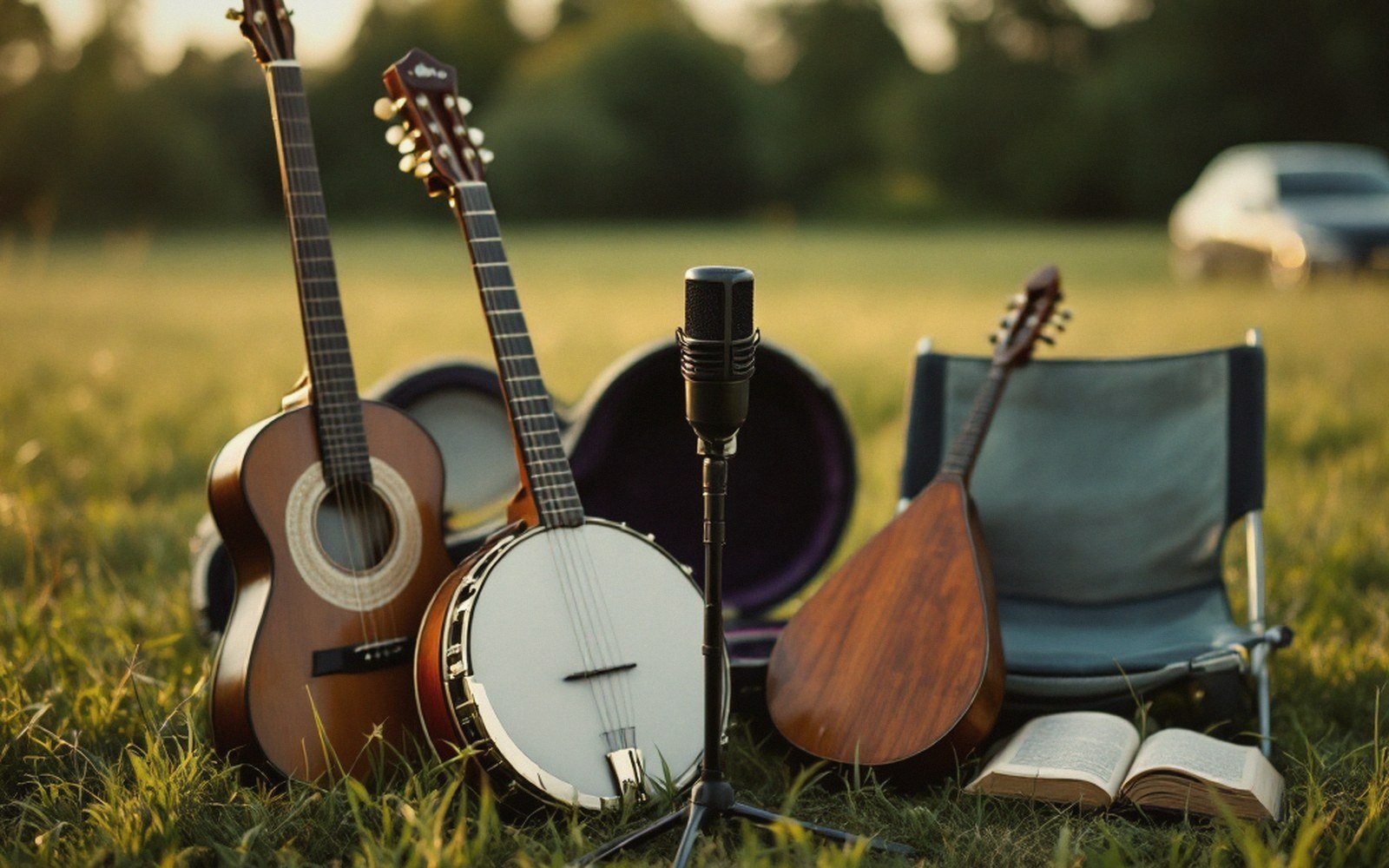
One capsule for the whole band. Everything the audience hears is a decision about distance from it.
Filed in The Circle