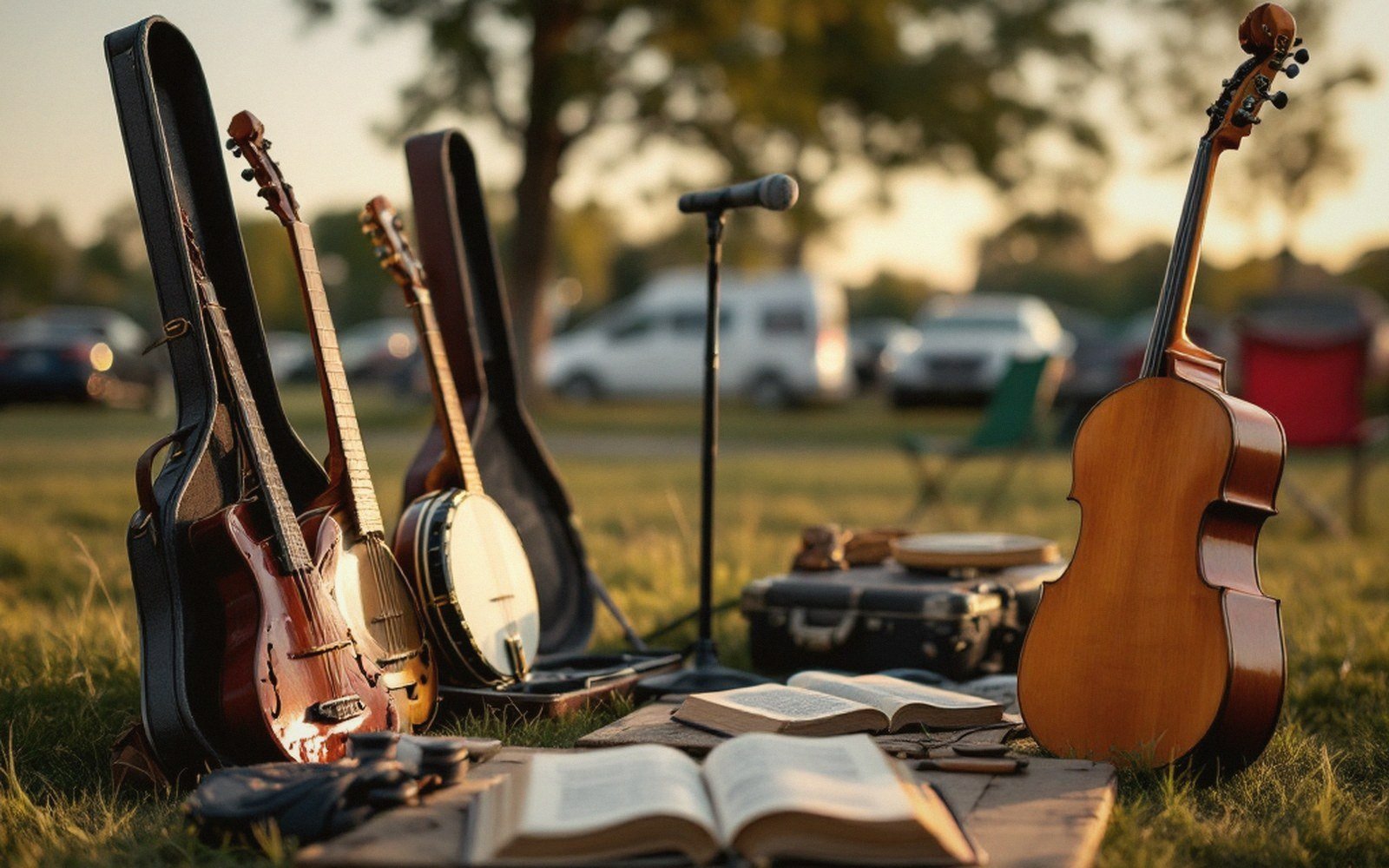
The rules are unwritten and strictly kept. Most of them are about when not to play.
Taking a break in turn, and the unwritten rules that keep it working.
The rotation matters more than the rules
Nobody hands you a rulebook when you step into a jam circle, but the etiquette is real and it is enforced — not loudly, not explicitly, but by the slight adjustment of body language from the players around you when you get it wrong. The good news is that the logic is simple: keep the rotation fair, keep the energy moving, and never make the circle work harder than the music.

A stage set for one microphone: the marks on the floor are the arrangement.
Photo: Wendy Wei / PexelsThe break — one player stepping forward to take the melody while everyone else drops to rhythm — is the basic unit of circle time. It travels around the ring, usually clockwise, one instrument at a time. If you are in the circle, you are in the rotation. When your turn comes you play your break; when it does not, you play rhythm and you listen. That is the whole structure.
What breaks it? Jumping your turn is the most common offence, followed closely by its mirror image: refusing your turn so insistently that the circle stalls waiting for you. Both put the burden on everyone else. If you genuinely do not want a break this time, a small wave-off while keeping your eyes on the next player moves things on cleanly. Do it once; if you wave off every tune, you are taking up space in a rotation without contributing to it, and people will notice.
Volume is the other pressure point. Rhythm playing should sit underneath the break, not alongside it. When someone steps forward, the guitars drop, the mandolin chop stays light, and the banjo rolls at a level that supports without competing. Overplaying during someone else's break is the acoustic equivalent of talking while they are speaking.
Tempo holds the circle together more than any other single thing. Whoever starts the tune sets the speed, and that speed is a gift to everyone who follows — it has to be sustainable. A tempo that creeps upward over successive breaks is a common problem: each player pushes just slightly, adrenaline feeds into it, and by the time the tune reaches the far side of the circle it is a sprint that nobody wanted. The cure is the guitar and bass, who can anchor the pulse quietly while the soloists do what they do.
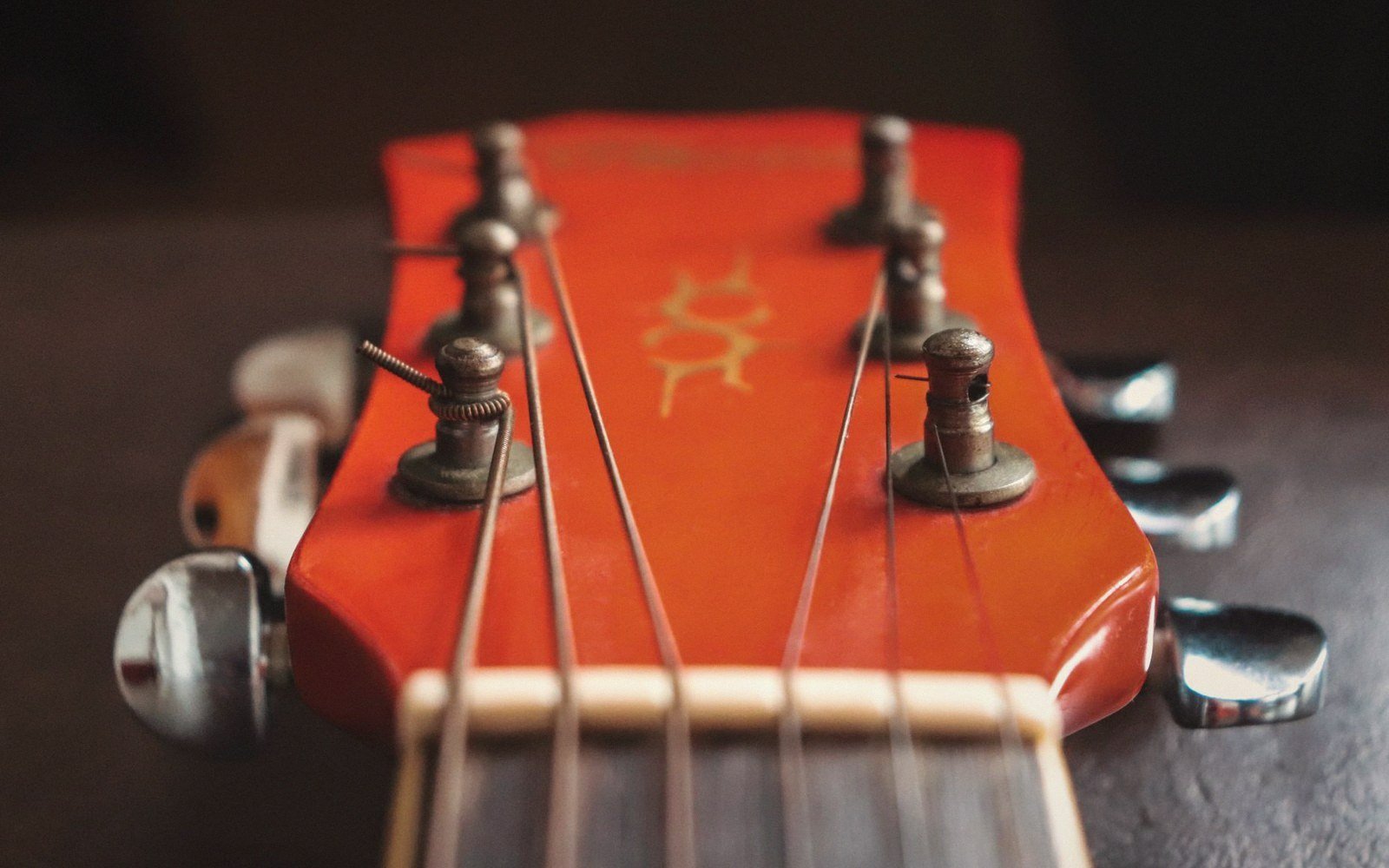
The metal cone under the top is what lets a resonator carry over a full band.
Photo: Harvey Tan Villarino / PexelsCalling tunes is a rotation of its own: one person suggests, the circle nods or shakes, someone names a key, and you go. No one person holds the microphone all night. This keeps the repertoire from narrowing around whoever is most confident, and it keeps the circle from becoming a showcase for one person and a waiting room for everyone else.
Filed in The Circle