
A steel bar instead of fingers, and a spun metal cone instead of a wooden soundboard.
A guitar built around a metal cone instead of a hollow top, played flat with a bar — louder before amplification solved the problem, and still different enough to matter.
What it is and where it sits
The resonator guitar — most often called a Dobro, after the Dopyera brothers who popularized a square-necked variant in the late 1920s — is a guitar whose sound comes not from a wooden soundboard but from a spun aluminium cone mounted inside the body. The bridge sits on a small wooden biscuit at the cone's centre; string vibration transfers through that biscuit, drives the cone, and the cone pushes air at a volume a plain flattop cannot match.

The chairs face inward because the circle, not a stage, decides who plays next.
Photo: K / PexelsIn bluegrass, the instrument almost always appears in its square-neck form, laid horizontally across the player's lap. The fretting hand holds a steel or glass bar against the strings rather than pressing them to a fret. Notes sustain, bend easily, and carry a singing, slightly nasal quality that sits between the guitar and the pedal steel — warm enough to fit inside a vocal arrangement, metallic enough to cut through a banjo roll and a mandolin chop going full tilt.
What it does in the arrangement
The resonator is not a rhythm instrument. It does not chop, it does not provide bass runs, and it does not move from the microphone to negotiate its own volume — it holds a position and works primarily as a lead voice. In a bluegrass band it tends to take the instrumental break on slower material: gospel songs, modal tunes, hymn-tempo numbers where the singing, sustaining quality of the bar can properly unfold. Against an up-tempo breakdown it sounds busy and cluttered; against a long, mournful melody it sounds exactly right.
Because every note slides from where it starts to where it lands, the resonator plays the spaces in a song differently from any fretted instrument. A banjo player articulates a melody note by note; a Dobro player can connect two notes with a glide and place the ornament — the grace note, the vibrato at the top of a bend — wherever the phrase needs it. The effect is closer to the human voice than most stringed instruments manage.
Josh Graves, who played with Flatt and Scruggs from the mid-1950s, is the player most responsible for establishing what the resonator does in bluegrass specifically. He pulled the instrument into a hard-driving context and made its sustain and slide vocabulary feel native rather than borrowed.
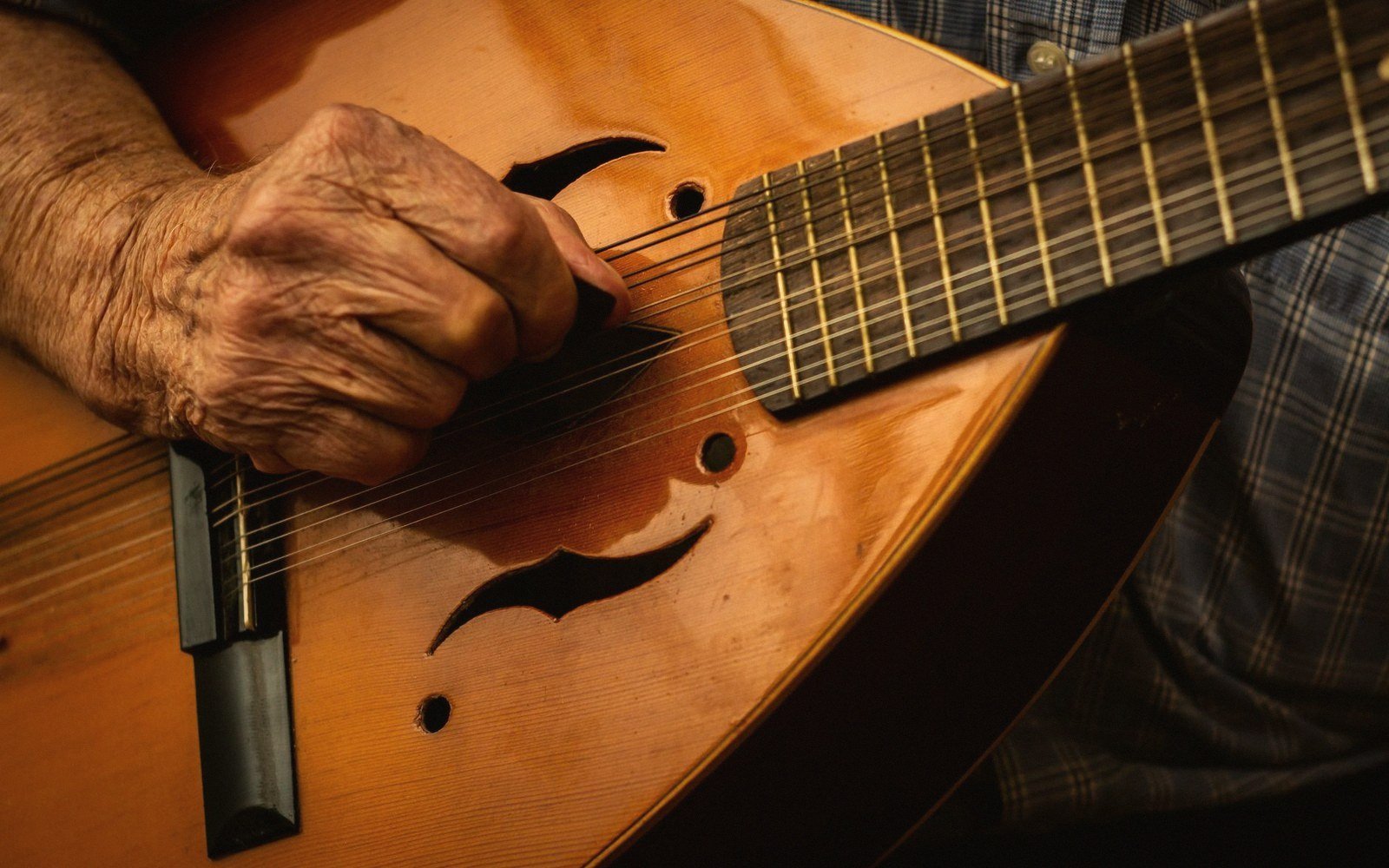
The mandolin’s short, damped chord does the work a snare drum does elsewhere.
Photo: Marcelo Renda / PexelsA band does not need one. Many working bluegrass groups carry none at all. But when one is present and the song gives it room, the resonator opens a register — legato, slow, aching — that nothing else in the lineup provides.
Filed in The Instruments