The guitar holds the floor
Bass runs and rhythm, and the one instrument everyone else is listening to.
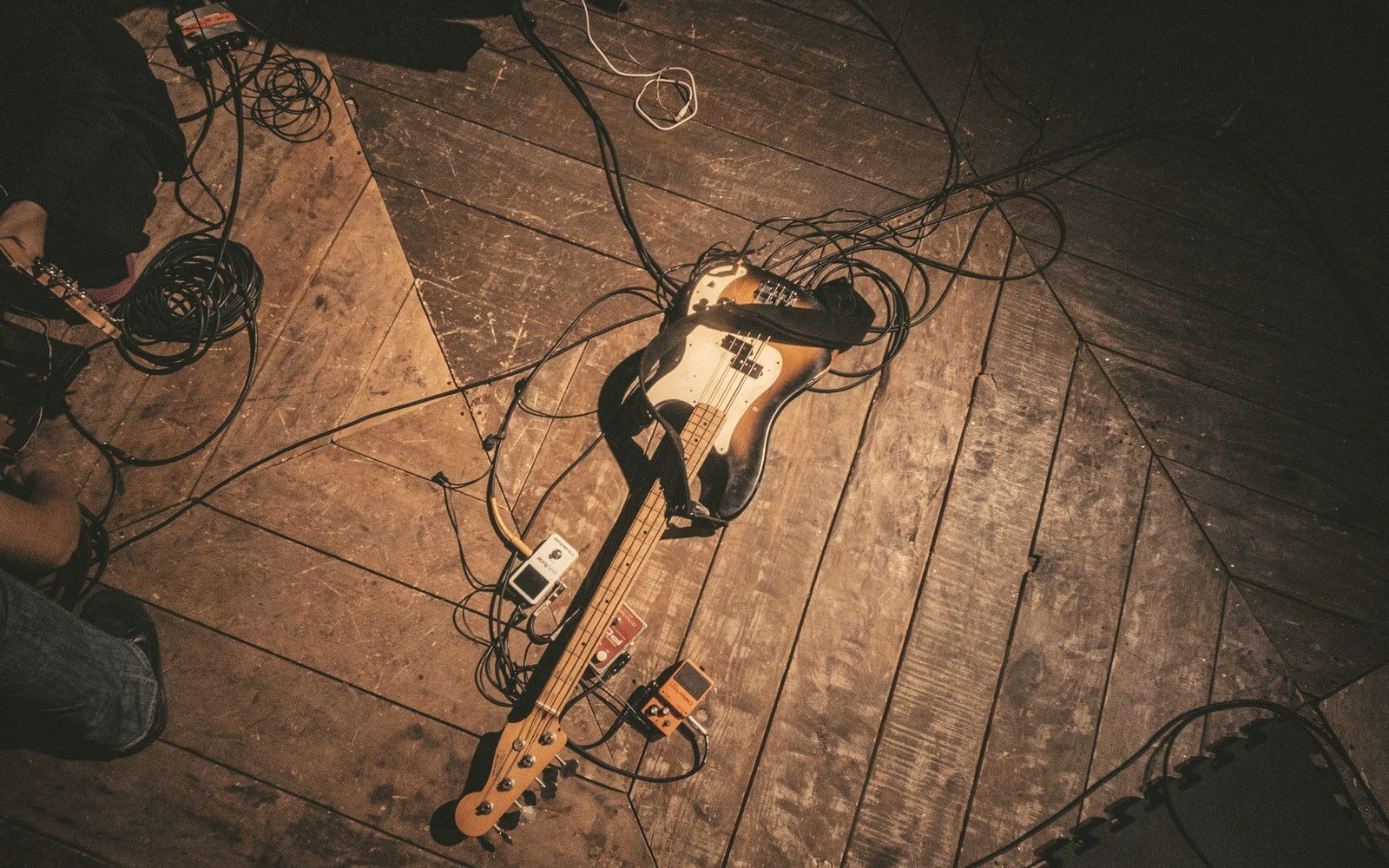
Everyone in the circle is listening to the guitar, whether or not they would say so.
The instrument nobody watches, doing the work everyone depends on.
The job beneath the job
In a bluegrass band the guitar rarely takes the spotlight. The banjo gets the rolling break, the mandolin takes the fast solo, the fiddle answers the vocal. The guitar is underneath all of it — and that is precisely the point.
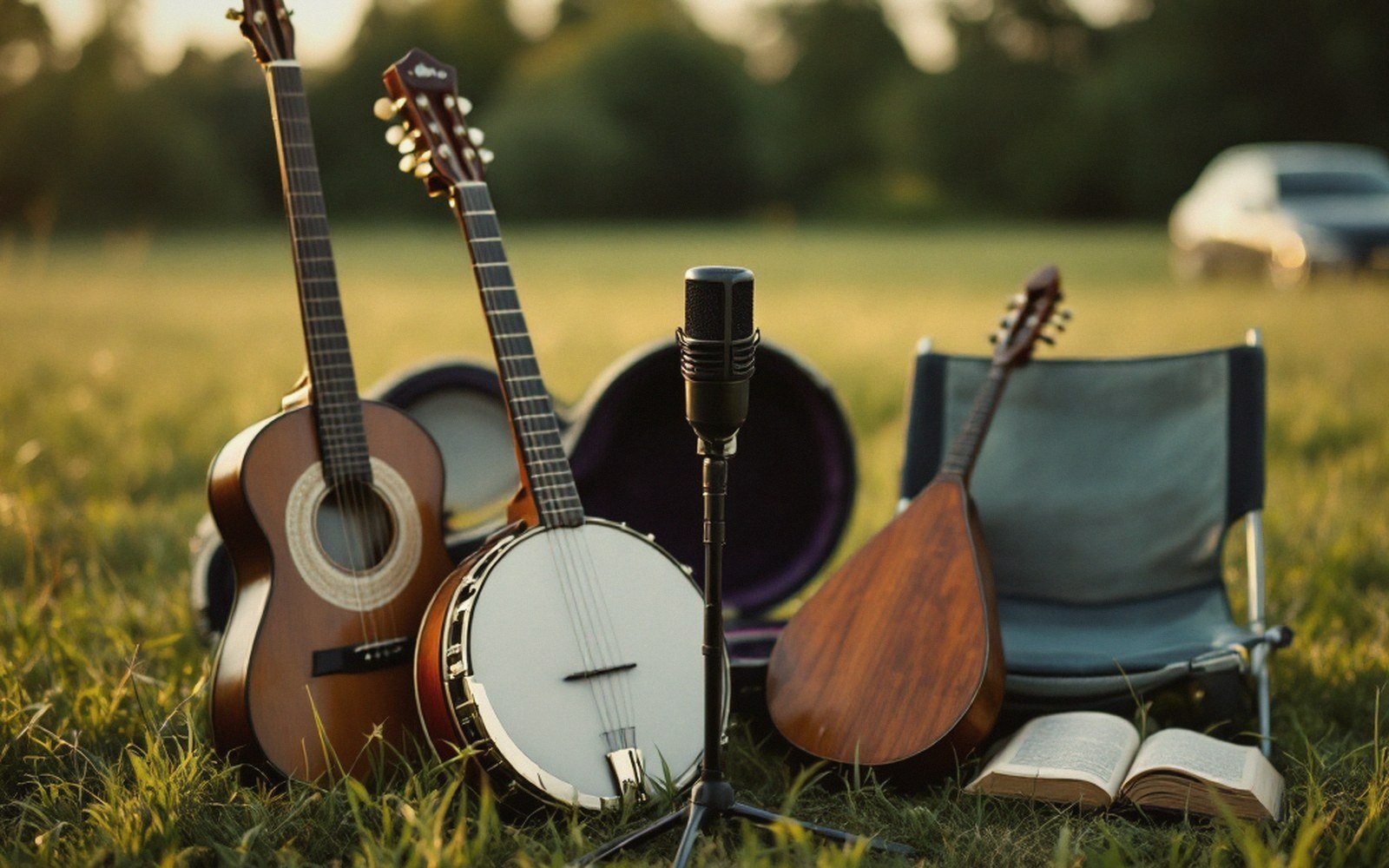
One capsule for the whole band. Everything the audience hears is a decision about distance from it.
The primary job is timekeeping. The guitarist plays a boom-chick pattern: a single bass note on the downbeat, a brushed strum across the middle strings on the two and four. It is not flashy. It is the pulse that every other player is locking to, whether they know it or not. Strip the guitar out of a recording and the band does not fall apart dramatically — it just loses its floor. Things get slightly unmoored.
What separates a good bluegrass guitarist from an adequate one is the bass run. Between chords, instead of simply landing on the new root, the guitarist walks down or up through a short melodic line that connects the two harmonies. A G moving to C might step through F-sharp and E on the way. Those two or three notes are functional — they tell every other player that a chord change is coming — but they also carry a recognizable melodic shape, part of the shared vocabulary of the style. Carter Family recordings from the late 1920s and early 1930s codified many of these runs, and they have been in circulation ever since. Maybelle Carter's right-hand technique — playing melody on the bass strings with the thumb while the fingers brushed the rhythm — gave the guitar its first moment of real melodic independence in the genre's ancestral tradition, and the bass run is the direct descendant of that idea.
In an arrangement built around one microphone, the guitar occupies the center of the semicircle more reliably than any other instrument. The bass player stays fixed. Soloists step forward and back. But the rhythm guitarist is the anchor, staying close, keeping the tempo honest, holding the ground level for everyone else to stand on.
This is also the instrument most likely to be played by the lead singer. Singing lead while driving the rhythm is its own coordination challenge, and it shapes the phrasing — the bass runs arrive between vocal lines, filling space the way a breath would, keeping forward motion through the pauses. The guitar and the voice become a single system.
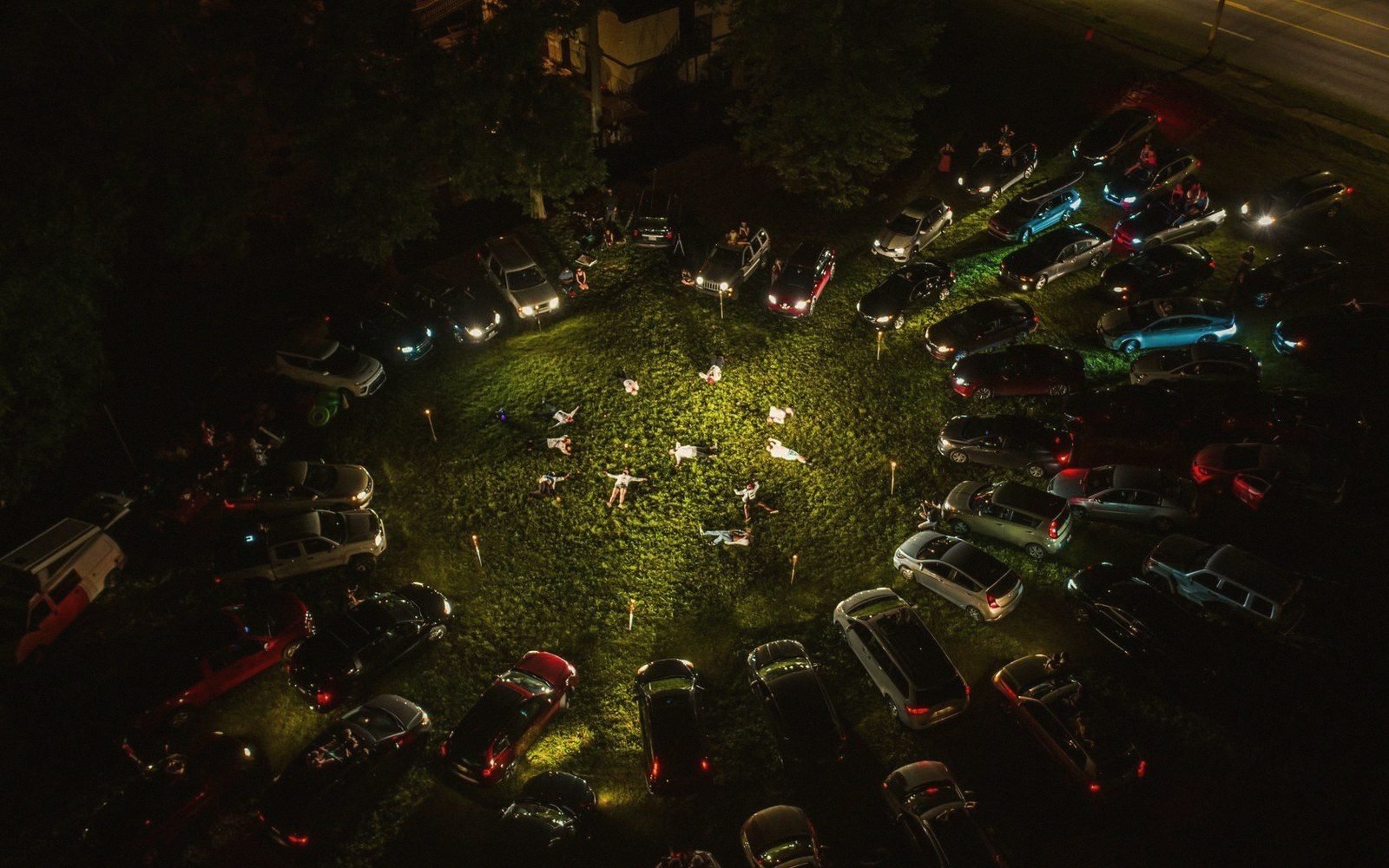
The chairs face inward because the circle, not a stage, decides who plays next.
Photo: K / PexelsThe result is an instrument that functions like a good session musician in any genre: indispensable, self-effacing, and immediately noticeable only when something goes wrong. The guitar holds the floor so everything above it can move.
Filed in The Instruments